Oak Island’s Most Puzzling Artifact: How a 175-Year-Old Coin Is Rewriting the Mystery
Oak Island’s Most Puzzling Artifact: How a 175-Year-Old Coin Is Rewriting the Mystery
For more than two centuries, the Oak Island mystery has thrived on rumours, theories and the occasional intriguing clue. But a newly resurfaced artifact – a bent silver coin first noted in an obscure 1849 incident – is now prompting the most serious re-evaluation of the island’s history in decades. It is a find that connects modern researchers to the earliest excavators and raises new questions about how much of the fabled treasure was once within human reach.

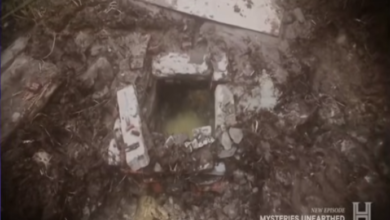
The coin, badly weathered yet immediately recognisable as centuries old, was introduced to the war room by researcher Steve Guptill. What startled the team was not simply its age but its provenance. According to 19th-century field journals, the object was last seen during what later became known as the “Piblato incident,” a brief but mysterious entry in the records of early Oak Island searcher Jotham B. McCully. In 1849, McCully wrote that a man known only as “Piblato” descended the Money Pit to a depth of 98 feet – and quietly pocketed an item before climbing back to the surface.
No description was recorded. No follow-up was ever documented. The man himself vanished from the archives as abruptly as he had appeared.
For generations, the episode was dismissed as folklore, a footnote in a story already crowded with exaggerations. Yet the reappearance of this coin – in soil that clearly predates modern activity – gives the account new credibility. If the artifact retrieved this season truly matches the era and condition described in McCully’s journals, it would mean that someone in 1849 physically removed an item from the Money Pit. It would further indicate that valuable or unusual objects were indeed present in the shaft before its catastrophic collapses in the late 19th century.




That alone marks a major shift. Oak Island has often been a landscape shaped by speculation, with critics arguing that no tangible evidence ever proved the existence of a significant deposit. The resurfaced coin challenges that view. It suggests that treasure – or at least objects associated with a larger cache – was once accessible, however briefly.
Even more striking is the coin’s design. Under magnification, researchers observed a faint yet deliberate cross motif. Its proportions and flared arms bore a strong resemblance to symbols used by the medieval Knights Templar and later by their Portuguese successor organisation, the Order of Christ. These orders were known for their maritime expansion and secretive voyages during the 14th and 15th centuries. Their navigators were among the earliest Europeans to explore the Atlantic’s western fringe long before official records acknowledged trans-oceanic contact.
If the coin truly originated from that era, its presence at the bottom of a 19th-century excavation shaft introduces a dramatic historical implication: that Oak Island might not merely be a site of colonial-era engineering but part of a much older, trans-Atlantic narrative involving seafarers, clandestine missions and assets too valuable to leave unguarded.
But the artifact also recasts the role of Piblato. Was he merely a curious bystander? Or was he someone who recognised the significance of the artifact he retrieved? His silence, and his decision to conceal whatever he found, now seem far more meaningful. Some in the team wonder whether Piblato understood that the coin pointed to a larger, possibly ancient network of activity on the island – a network that modern researchers have only begun to uncover.
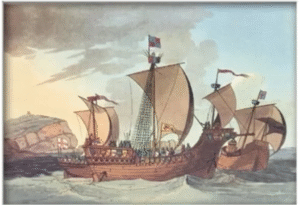
The coin’s re-emergence coincides with the Lagina team’s deepening investigation into the geological structure beneath the Money Pit. New seismic data suggests that centuries of collapses may have driven the original deposit downward into a vast, water-filled cavern known as the solution channel. If the treasure fell into that void, then any surviving objects could be resting more than 200 feet below modern ground level. The coin may therefore represent one of the last items handled before the collapse sent everything deeper into the island’s natural bedrock.
For Rick and Marty Lagina, the coin is not simply a relic. It is evidence – tangible, datable, and connected to both the earliest searchers and an older world that predates colonial settlement. It is the first time in years that Oak Island has offered something material enough to shift the foundations of the long-running investigation.
The island still guards its secrets fiercely. But for the first time in generations, a small piece of silver, bent and weathered by time, has begun to speak. And its story may force historians, archaeologists and sceptics alike to re-examine what they thought they knew about the most enigmatic treasure hunt in North America.