Oak Island: The Three Ancient Discoveries That Stole the Lagina Crew’s Sleep
The Three Ancient Discoveries That Stole the Lagina Crew’s Sleep
For more than a decade, the Oak Island team has grown used to long nights, slow breakthroughs, and mysteries that rarely give clear answers.
But this season, three discoveries have rattled even the most seasoned members of the crew—three finds so old, so unexpected, and so historically disruptive that, for the first time in years, the island seems close to revealing its deepest secrets.
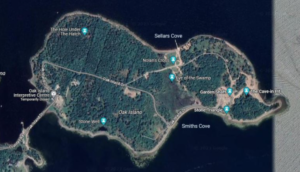
These discoveries—on Lot 26, Lot 5, and inside the Garden Shaft—may reshape everything we thought we knew about Oak Island’s timeline.
Let’s break them down.
1. The Well on Lot 26 — A Structure Older Than Anything on Oak Island
What first appeared to be a simple stone-lined well quickly evolved into one of the most astonishing finds in the history of the search.
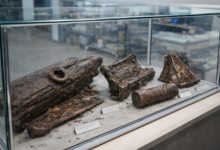
A Well That Refuses to Freeze
The team noticed something extraordinary:
Even during brutal winter temperatures, the well never froze.
On an island where water features often behave unpredictably, this was unheard of.
The anomaly prompted the crew to conduct:
-
Water chemistry analysis
-
Core sampling
-
Material dating
-
Structural excavation
Each step pulled them deeper into a puzzle no one expected Lot 26 to hold.
Carbon Dating Shock: 1028–1172 AD
When organic material from the bottom of the well was carbon-dated, the results stunned the entire team:
1028–1172 AD.
This makes the Lot 26 well one of the oldest human-made structures ever found on Oak Island, predating known settlement by centuries—even predating the earliest European contact.
The revelation forced the team to reconsider who may have used Oak Island nearly 1,000 years ago… and why.
A Structure Bigger and Stranger Than Expected
As excavation continued, the well revealed:
-
A larger diameter
-
Deeper lining
-
Evidence of long-term use
-
Possible silver traces
The discovery now sits at the center of the island’s growing timeline anomaly:
Why was Lot 26 occupied a full millennium ago?
And what does the well’s advanced engineering suggest about who built it?
The answers may redefine everything.
2. The Circular Stone Depression on Lot 5 — A Mirror of the Original Money Pit
If Lot 26 shook the team, Lot 5 electrified them.
When the new owners took control of Lot 5—once the home of legendary treasure hunter Robert Young—they expected history.
They didn’t expect this.
A Perfectly Symmetrical Stone Circle

Drilling revealed a circular depression lined with carefully placed stones—almost identical in shape and size (13 feet across) to the original description of the Money Pit in 1795.
This was no natural formation.
This was deliberate.
And it raised an immediate question:
Why does Lot 5 contain a second Money Pit–like structure?
A Treasure Hunter’s Legacy Comes Alive
Lot 5 has always been unusual.
Robert Young claimed:
-
Roman coins
-
Templar-era artifacts
-
Mysterious metal tokens
Now the new team is confirming those hints.
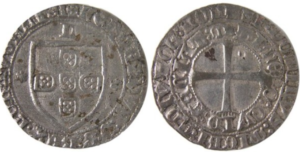
The discovery of a 2,000-year-old Roman coin, alongside a lead barter token resembling the 14th-century lead cross, suggests a direct link to the Knights Templar—a theory that has hovered around Oak Island for years.
Older Layers Beneath the 1700s Structure
The crew now suspects:
-
An older stone structure lies beneath the depression
-
The 1700s builders may have rebuilt or copied something ancient
-
The site may connect to Zena Halpern’s controversial 14th-century Templar map
The further the team digs, the more Lot 5 refuses to stay quiet.
3. The Garden Shaft — Gold in the Water and a Tunnel Beneath
The Garden Shaft has evolved from a memorial site to one of the most compelling clues in the entire Money Pit area.
Gold in the Water
Water samples taken from the shaft revealed gold signatures—consistent with the idea that gold may be stored nearby.
Later, water samples from a 95-foot tunnel south of the shaft revealed even higher concentrations.
Gold.
Underground.
Right beneath the Garden Shaft.
Wood Carbon-Dated Older Than the Money Pit
A wood sample from 50 feet deep revealed another shock:
The Garden Shaft predates the Money Pit’s 1795 discovery by over 50 years.
Meaning:
-
Someone dug here before the original searchers
-
The structure may connect directly to the vault
-
The 82-foot shaft may not be a searcher tunnel—
it may be original construction
A Tunnel Leading Toward the Money Pit
The crew’s scans revealed a tunnel trending toward the Money Pit with the highest gold readings yet observed.
This could represent the long-suspected access tunnel or flood tunnel used by whoever engineered the original traps.
Dumas Mining rebuilt the Garden Shaft for further descent, but winter forced the team to pause at 82 feet.
The mystery, however, is only getting deeper.
⭐ Conclusion: Three Discoveries, One Time-Shattering Question
Across Lot 26, Lot 5, and the Garden Shaft, one theme is emerging:
Oak Island’s secrets are far older than anyone imagined.
Structures from the 1100s.
Artifacts from the Roman era.
Engineering aligned with Templar maps.
Gold signatures beneath 300-year-old tunnels.
The island is no longer a single mystery.
It is a timeline collision.
And these three discoveries may be the final warnings that the truth—whatever it is—is finally close.