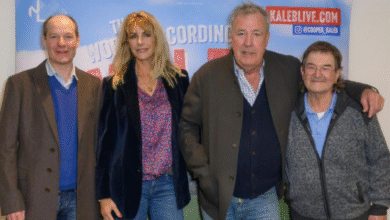
Jeremy Clarkson argues against inheritance tax changes as thousands of farmers protest in London
Jeremy Clarkson argues against inheritance tax changes as thousands of farmers protest in London
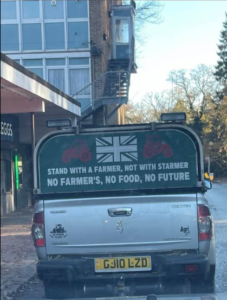
Thousands of farmers converged on central London this week to voice their opposition to proposed changes in inheritance tax rules, arguing that the reforms would impose unsustainable financial pressure on rural communities. Among those standing with protesters was broadcaster and farmer Jeremy Clarkson, who gave a forceful defence of the agricultural sector during a tense on-camera exchange.
Clarkson, who runs Diddly Squat Farm in Oxfordshire, insisted he appeared at the demonstration not for personal gain but to highlight what he described as a “deeply unfair” burden placed on farmers by the incoming tax plans. Questioned about his motivations, he rejected the suggestion that his presence was linked to his own financial interests.
“I’m here to support farmers,” he said. “I’m not angry on someone else’s behalf, and this isn’t about me.”
The conversation quickly sharpened when the interviewer raised a familiar criticism: that Clarkson had purchased his farm partly to avoid inheritance tax. He dismissed the claim as a “classic BBC” mischaracterisation, though he acknowledged that he had previously spoken about the financial considerations involved in owning farmland.
“I wanted to shoot, which comes with the benefit of not having to pay inheritance tax. But people like me will simply put it in a trust and, so long as I live for seven years, that’s fine,” he said. He went on to quote his daughter, who once joked that even if it required placing him in a freezer, he would be kept alive long enough to satisfy the threshold.
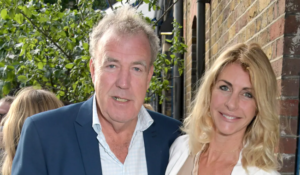
Clarkson argued that the new legislation would dramatically expand the number of farmers subject to inheritance tax, turning what has historically affected a small minority of estates into a widespread burden. “Do you know how many people pay inheritance tax in this country? Four per cent. Ninety-six per cent of the population does not pay it,” he said. “After this becomes law, ninety-six per cent of farmers will.”
Pressed on where he obtained that figure, he replied sharply: “The same place Rachel Reeves does—from the middle of her head.” He accused the Chancellor of relying on “sixth-form debating society thinking” and claimed the reforms were driven more by ideology than economic necessity.
When the interviewer pointed out that the government argues the change is needed to support public services, Clarkson responded by referencing delays in healthcare and his own recent health scare. “Have you tried to get a GP appointment lately? It’s tough,” he said. “But why should farmers be the ones paying for everything?”
As protesters around him cheered, Clarkson issued a direct message to ministers: “Please back down. Please.”
Asked where alternative revenue should come from, he replied, “Walk into any of the offices around here. If you don’t understand what someone’s job is, follow them. The civil service is too top-heavy and everyone knows it.”
The exchange underscored the increasingly heated debate between the government and the rural sector, which argues that the proposed tax changes would force family farms into selling land simply to meet liabilities. Farmers’ unions have warned that the reforms risk undermining food production and accelerating the decline of small and medium-sized holdings.
While Treasury officials maintain that the revised rules are designed to close loopholes and ensure fairness across the tax system, the backlash has quickly grown. With protests spreading and political pressure rising, ministers now face mounting calls to reconsider the plan or risk long-term damage to Britain’s agricultural landscape.