The Curse of Oak Island Episode 7: Rick Lagina Finally Admits the $150M Templar Vault Is REAL Beneath Oak Island!
The Curse of Oak Island: Episode 6 Recap and What to Expect from Episode 7
Episode six of The Curse of Oak Island, titled The Heat Is On, delivered a familiar mix of persistence, speculation, and unanswered questions, as the team continued its long-running effort to make sense of the island’s layered past. While billed as a pivotal instalment, the episode ultimately reinforced how elusive clear conclusions remain.
The hour opened with further core drilling around the Money Pit area. As has often been the case this season, the results were underwhelming. No clear structural evidence emerged, and once again the team was left interpreting ambiguous samples rather than uncovering definitive proof of engineered works.
Attention then turned to water testing, led by geoscientist Dr Ian Spooner. Viewers were told the samples contained elevated levels of precious metals, though no specific figures or comparative data were presented on screen. The results were framed as further support for the theory that valuable material may have broken down over time and travelled through underground waterways beneath the island.


However, the lack of visual data or detailed explanation left the findings open to interpretation. As with previous water analyses, the implications were discussed more enthusiastically than they were demonstrated.
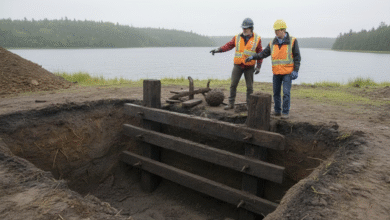
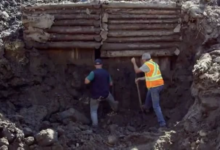
Activity in the swamp provided the episode’s most visually engaging segment. The team uncovered stones believed to be part of an old ox road, potentially used to transport heavy loads across the island centuries ago. Organic material was also described as “unnatural”, though no clear explanation was offered as to how this conclusion was reached.
A horseshoe was presented as supporting evidence for animal traffic in the area, reinforcing the ox-road theory. While such finds are consistent with historical activity, the episode stopped short of firmly linking them to any specific treasure narrative.
Back in the war room, maps were spread out and recent discoveries compared. This led the team to Lot 15, where excavation produced a small collection of items: coal fragments, a fastener, a metal object identified by Gary Drayton as a possible pintle, and a button. As is often the case, the interpretations leaned heavily on possibility rather than confirmation.

The segment concluded with the discovery of a compass, which was tentatively connected to the alignment of Nolan’s Cross. While the suggestion added another layer to the island’s already complex mythology, no direct evidence was presented to strengthen the connection.
Looking ahead, episode seven, titled Walk the Line, shifts focus to a possible marker stone that may offer new insight into early activity on Oak Island. Scheduled to air on 16 December, the episode is expected to examine whether the stone represents a deliberate boundary or directional marker linked to past explorers.
As ever, the team will attempt to determine whether the feature reflects purposeful design or is simply another natural element shaped by time and environment.
For long-time viewers, episode six will feel familiar rather than transformative. The search continues, theories evolve, and each small find is weighed for its potential meaning. Whether Walk the Line provides greater clarity remains to be seen, but it will undoubtedly add another chapter to Oak Island’s enduring puzzle.