Clarkson’s Farm Star Harriet Cowan Opens Up on Christmas Pressures, Farm Struggles and a Life-Changing Future
Harriet Cowan: The Farmer Behind Clarkson’s Farm and a Christmas Rooted in the Countryside
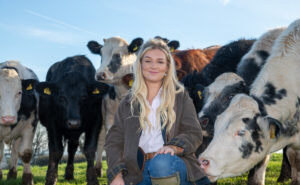
When Harriet Cowan appeared on Clarkson’s Farm, she quickly became a familiar face to viewers. Calm, capable and quietly confident, she stood out not as a television personality chasing attention, but as a working farmer grounded in everyday reality. Yet away from the cameras, Cowan’s story is far deeper than a brief appearance on a hit series. This Christmas, she is reflecting on a year that has changed her life – while remaining firmly rooted in the rhythms of the farm.
Speaking from her family’s holding in Derbyshire, Cowan describes the past year as “a whirlwind I never expected”. Raised between two worlds – a “towny” upbringing on her mother’s side and farming heritage on her father’s – her connection to agriculture was forged early. Her grandparents bought the farm in the 1950s, laying the foundations for a family business that has evolved over generations.
From a young age, farming was simply part of life. Lambing sheep, helping outdoors in all weather, and learning resilience through routine rather than instruction. “You just got on with it,” she says. “If it was cold, you put on another coat.” By the time she was ten, Cowan was deeply involved in sheep work – an experience that would shape her understanding of responsibility and perseverance.

Yet farming was not always the obvious career path. With a small family holding unable to support multiple incomes, Cowan made the pragmatic decision to study nursing. Inspired by caring for her grandfather during illness, she trained at the University of Derby and worked in community healthcare. Nursing, she says, taught her discipline, empathy and pressure management – skills she still relies on daily.
For years, she assumed she would remain in healthcare. Farming, while deeply personal, felt financially out of reach. That changed when her involvement with Clarkson’s Farm brought unexpected visibility – and with it, opportunity. The platform allowed Cowan to return to farming full-time, something she once thought unachievable.
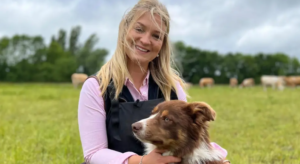
Today, the family farm remains modest but carefully run. Around 20 store cattle are bought annually from local dairy farms and reared for 16 to 20 months, alongside a flock of 40 to 50 breeding ewes. The business is supplemented by contract work – baling, tedding and silage – and the sale of hay and fodder to local horse owners. Wherever possible, meat is sold locally through short supply chains, with animals travelling minimal distances from field to plate.
But like many farmers, Cowan faces mounting challenges. Extreme weather has reduced fodder supplies, disease restrictions have disrupted cattle sourcing, and rising input costs continue to squeeze margins. “There’s no security,” she explains. “You can invest 18 months of work without knowing if you’ll make a profit at the end.” Machinery, feed and straw costs continue to rise, while prices paid to farmers remain volatile.
Despite this, Cowan sees public engagement as essential. She uses her growing profile to explain farming realities to audiences unfamiliar with food production. “People want to learn,” she says. “If you’re not in an industry, you don’t see what’s behind it.” She believes farming is often misunderstood – reduced to headlines rather than lived experience – and argues that education is key to rebuilding trust.
That sense of responsibility extends to representation. Cowan has become an informal role model for young women considering agriculture, recently receiving recognition through national farming awards. While grateful, she is keen to normalise the idea of women in farming. “I don’t want to be seen as a ‘woman farmer’,” she says. “Just a farmer.” Messages from parents saying their daughters are now considering agricultural careers remain one of her proudest achievements.
As Christmas approaches, however, the focus shifts away from public debate and back to family. Christmas Day begins as any other – checking animals and feeding stock before celebrations can start. This year, festivities will be shared between households, with home-reared produce taking centre stage. Turkey remains a firm favourite, alongside goose raised by Cowan’s sister, and a fiercely competitive family “Yorkshire pudding-off” to decide who earns the right to cook on the day.
For Cowan, Christmas is about reconnecting – with family, food and tradition. “It’s the one time everyone sits down together,” she says. “You remember where food comes from, and what you’ve done over the year.”
Looking ahead, plans are already forming. Talks are underway about establishing her own farm in the coming years, alongside new machinery and more digital content to document the journey. But for now, Cowan remains reflective rather than ambitious.
“It hasn’t been easy,” she says. “But it’s been the best time. I wouldn’t change it for the world.”
In an era of uncertainty for British agriculture, Harriet Cowan’s story offers something rare: realism without cynicism, pride without performance – and a reminder that behind every television moment lies a working farm, carrying on through winter, Christmas included.