Oak Island Season 13, Episode 17: Triangular Clue Shocks Everyone as $250M Treasure Is Finally Found
Oak Island Season 13: Triangular Formation and Deep Artefact Renew Money Pit Debate
A deep artefact recovered from the Money Pit area and the mapping of a geometric formation beneath Oak Island have reignited debate over whether the centuries-old mystery may finally be approaching resolution.
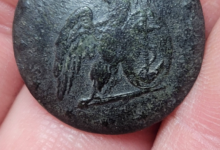
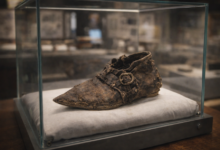
In Season 13, Episode 17 of The Curse of Oak Island, the team led by Rick and Marty Lagina reported the discovery of an object at significant depth — evidence, they argue, of human activity far below previously confirmed layers. According to the programme, the item emerged from a zone long associated with early shaft construction attempts dating back to the late 18th century.
“What’s remarkable is the depth,” one team member observed during the episode. For the Laginas, who have spent over a decade investigating the Nova Scotia site, proof of men working at depth has been a central objective.
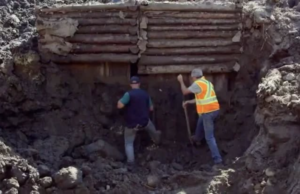
Alongside the artefact, late-night seismic surveys detected what were described as hollow anomalies beneath the surface. Subsequent mapping revealed what appears to be a triangular formation — not on the surface, but inferred through subsurface data patterns. The angles, the team suggested, align with earlier drill targets and historical accounts linked to the original Money Pit search.
While such findings are presented as significant, independent archaeological verification has yet to confirm whether the formation is man-made or the product of natural geological processes.
Geometry or Geology?
Triangular alignments have long featured in Oak Island lore. Early searchers in the 1800s described marker stones and carved symbols that, they believed, indicated buried treasure. Over time, many of these claims were either lost to documentation gaps or challenged by historians.
In this latest development, the programme suggests that the triangle corresponds with traditional “treasure marking systems”, a claim that has drawn interest but also caution from academic observers. Geologists note that natural fissures, sediment shifts and bedrock fractures can produce surprisingly symmetrical shapes when interpreted through seismic imaging.
The new artefact — reportedly recovered from substantial depth — may offer stronger evidence of past excavation efforts. However, its precise dating and context remain key. Objects discovered in disturbed soil layers can sometimes reflect later search activity rather than original depositors.
The Money Pit has seen repeated digging since 1795, including shafts, boreholes and heavy mechanical excavation. Untangling layers of human intervention over more than two centuries presents a complex archaeological challenge.
Echoes of Earlier Theories
The episode also revisits long-standing theories involving pirate treasure, Spanish bullion, and the Knights Templar. In particular, the triangular configuration is said to echo a hypothesis previously considered and later set aside by the team.
Over the years, Oak Island investigations have linked discoveries to a broad historical range: 17th-century artefacts, medieval-style crosses, and even earlier European objects. Each new find has prompted renewed speculation, though definitive evidence tying the site to a specific treasure hoard remains elusive.
Estimates of potential value — including suggestions of a chamber worth hundreds of millions of dollars — are based largely on legend rather than confirmed inventory. No officially authenticated vault containing treasure has yet been documented on the island.
The Depth Question
What makes this episode noteworthy is not solely the geometric interpretation, but the emphasis on depth. Establishing irrefutable proof that early workers operated far below known flood tunnels would strengthen arguments that the Money Pit was deliberately engineered.
If confirmed, such engineering would imply a level of organisation and resource investment beyond that of opportunistic pirates. It could support theories of structured concealment, whether for valuables, documents or other assets.
Yet historians emphasise caution. The Oak Island narrative spans more than 200 years of repeated excavation, collapse and reconstruction. Flood tunnels themselves remain debated; while water intrusion is documented, the existence of an elaborate engineered system has not been conclusively proven through peer-reviewed study.
Between Legend and Evidence
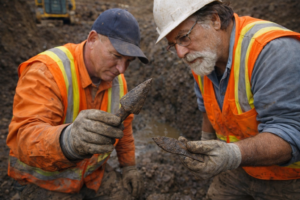
For Rick Lagina, whose pursuit of the island’s mystery began decades ago, each anomaly represents momentum toward closure. For sceptics, the same data may represent ambiguous signals open to interpretation.
Oak Island occupies a unique place in North American folklore — part archaeology, part endurance test. Its history includes documented sinkholes, equipment losses and tragic incidents across generations of searchers. But it has also delivered genuine artefacts that confirm human presence over centuries.
Whether the triangular formation marks the threshold of a hidden chamber or proves to be a geological coincidence remains to be seen. Further excavation, documentation and independent review will determine how this development fits into the broader record.
For now, Season 13’s latest findings ensure that Oak Island’s mystery endures — balanced between measurable evidence and enduring legend.