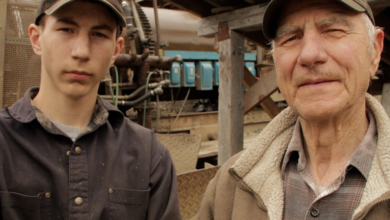
Gold Rush: Kevin Beets’ Risky Deal With Tony Beets
Kevin Beets Takes a $425,000 Gamble as Time Runs Short on Gold Rush Season 16
Nearly halfway through the current season of Gold Rush, Kevin Beets finds himself confronting a defining moment in his young career as a mine boss. With manpower stretched thin, gold totals lagging behind expectations and his remaining pay pile shrinking rapidly, the margin for error has all but disappeared.
Kevin entered the season targeting 2,000 ounces — an ambitious benchmark designed to cement his independence from his father, Tony Beets. But as weeks pass and recovery rates underperform, that goal has begun to look increasingly uncertain.
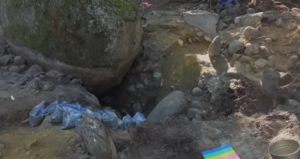
Facing mounting pressure, Kevin turned to what experience he does possess: years spent working alongside Tony in the Yukon. Those seasons taught him how to read ground conditions, interpret subtle geological shifts and identify promising cuts concealed beneath frozen overburden. After surveying ground roughly 500 feet north of his wash plant, he identified what he believed could be a lifeline. He named it the “Sphinx cut” — a fresh block intended to revive momentum before his stockpile ran dry.
Time, however, was unforgiving. The existing pay pile would last barely a week. Stripping needed to begin immediately.



Kevin dispatched operator Tyler Potter with their largest machine, a Caterpillar D10 dozer designed for heavy-duty clearing. But almost as soon as work began, mechanical failure forced the machine off the cut and back to the yard. Inspection confirmed the worst: no quick repair, no immediate return to work.
In Yukon mining, downtime is more than inconvenience. It compounds rapidly — fuel contracts, payroll, and plant operations continue regardless of production. A stalled dozer at a critical juncture can unravel weeks of planning.
Kevin explored alternatives with his team, including sourcing equipment from Alberta or the United States. Yet logistics in the North rarely favour urgency. Transport delays could stretch to weeks — time Kevin simply did not have.
That left one option he had hoped to avoid: returning to Tony for help.
The dynamic between father and son has defined much of Kevin’s professional identity. Determined to step beyond Tony’s considerable shadow, Kevin has sought to build his own operation, make his own calls and absorb his own risks. But independence in mining often requires capital, and capital requires bold decisions.
Tony revealed he had recently purchased another rebuilt dozer, leaving one Caterpillar D10 available. Estimated market value ranged between $500,000 and $1 million depending on condition. Kevin inspected the early-2000s machine carefully. Despite visible wear and a worn front idler, the engine fired cleanly and ran strong.
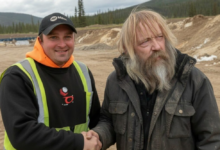
Negotiations followed — direct, firm, familiar. Kevin opened at $450,000, citing track wear and unknown total hours. After discussion, father and son agreed on $425,000.
The handshake that sealed the deal marked more than a transaction. For Tony, it was confirmation that his son was prepared to commit serious capital. For Kevin, it was a declaration of accountability. This was not borrowed equipment. It was ownership, risk and obligation.
Within hours, the dozer was delivered and deployed to the Sphinx cut. The urgency was evident. Without fresh ground, production would stall entirely.
Spending more than $400,000 at a vulnerable point in the season represented a calculated leap. But days later, early signs offered reassurance. During a weekend weigh-in attended by Tony and family members, Kevin’s crew poured 142.22 ounces — worth just under $500,000 at prevailing prices. Much of that revenue will service the new equipment, but the timing restored confidence.
The contrast with earlier episodes is striking. Earlier in the season, Kevin faced an uncomfortable exchange with Parker Schnabel over approximately $130,000 owed for equipment purchased months prior. At that time, Kevin appeared hesitant, cautious in addressing overdue payment.
Now, confronted with a commitment more than three times that figure, he acted decisively.
The difference lies less in numbers than in mindset. Mining at this level demands financial resilience, negotiation discipline and readiness to accept exposure. Kevin’s approach to the D10 purchase demonstrated growth in all three areas.
Operating in the Yukon under constant comparison to established figures like Tony and Parker brings scrutiny few young mine bosses experience. Yet Kevin appears increasingly comfortable with that scrutiny. Rather than avoiding difficult conversations, he is initiating them. Rather than delaying capital decisions, he is making them.
The Sphinx cut remains a work in progress. Seasonal weather, ground conditions and recovery rates will determine whether Kevin ultimately reaches his 2,000-ounce target. But the dozer purchase may represent the season’s most pivotal decision — not because of its price tag, but because of what it signals.
Kevin Beets is no longer cautiously stepping around responsibility. He is stepping into it, machine by machine, ounce by ounce.