Oak Island swamp discoveries reignite debate over early European activity in North America
Oak Island swamp discoveries reignite debate over early European activity in North America
For more than two centuries, the focus of exploration on Oak Island, off the coast of Nova Scotia, has centred on the so-called Money Pit — a deep shaft first reported in 1795 and long believed by treasure hunters to conceal a valuable cache. Now, attention has shifted dramatically to a different part of the island: a triangular swamp once dismissed as a natural wetland.
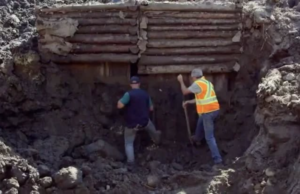
In recent seasons of The Curse of Oak Island, brothers Rick and Marty Lagina have overseen extensive drainage and excavation efforts in that swamp. What they have uncovered — including a 1652 Spanish coin, a paved stone feature, timber remains and a lead cross — has prompted fresh debate about who may have been active on the island centuries ago.
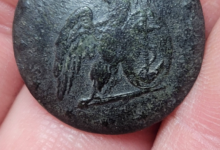
The 1652 copper coin, recovered by metal-detecting expert Gary Drayton, is among the most discussed finds. Coins from the mid-17th century are not unknown in Atlantic Canada, given established European fishing and trading networks at the time. However, its discovery in the swamp area has encouraged the team to consider whether activity on Oak Island predates the commonly cited origins of the Money Pit site.
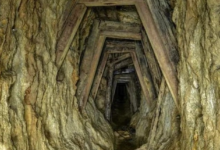
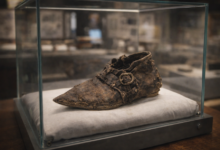
Geoscientist Dr Ian Spooner, who has worked with the team for several years, has argued that sediment analysis indicates significant human disturbance in parts of the swamp basin. Core samples have revealed layers of churned soil, stone and wood inconsistent with purely natural deposition. While such findings do not conclusively prove large-scale engineering, they support the view that the landscape was altered in the past.
One of the more striking features uncovered beneath the swamp is a stretch of flat stones described by the team as a possible roadway. Interlocking rocks appear to form a linear path extending across part of the basin. The Lagina team has suggested the structure may have been used to transport heavy materials. Archaeologists caution, however, that distinguishing between human-built features and glacial or tidal formations can be complex without broader excavation and peer-reviewed analysis.
Timber fragments retrieved from the swamp have also attracted attention. Some pieces show tool marks and traces of pitch, a substance historically used to waterproof ships. Carbon dating results, as presented on the programme, place certain samples between the mid-17th and early 19th centuries, though ranges remain broad. Such dates overlap with known periods of European maritime activity in the North Atlantic.
A heavy lead cross found near the stone feature has further fuelled speculation. According to testing cited on the show, the metal’s composition resembles lead sources from southern France. Some researchers have drawn parallels with medieval religious orders, including the Knights Templar. Historians, however, emphasise that similar crosses were produced in various European contexts over several centuries, and caution against drawing direct links without additional corroborating evidence.
At nearby Smith’s Cove, previous excavations uncovered structures interpreted as flood tunnels — stone-filled channels designed to direct seawater toward the Money Pit. Coconut fibre discovered in earlier digs was identified as originating from tropical regions, suggesting imported materials. While intriguing, scholars note that coconut fibre was used widely in maritime trade and could have arrived through multiple routes.
The Lagina team has more recently employed a steel coffer dam to isolate sections of the swamp, allowing heavy machinery to excavate below the waterline. Sonar surveys have indicated the presence of a large anomaly beneath the basin, which some believe may be the remains of a vessel. Excavation is ongoing, and no definitive identification has yet been made.
For supporters of the long-running search, the cumulative evidence — coinage, modified terrain, timber, and engineered water systems — suggests organised European activity on Oak Island before the late 18th century. Critics argue that while each find is individually interesting, none conclusively overturns established timelines of North American exploration.
Mainstream historical consensus recognises Norse presence in Newfoundland around AD 1000 and extensive European fishing in Atlantic Canadian waters by the 1500s. Spanish, Portuguese and French vessels operated widely across the Atlantic by the 17th century. The presence of European artefacts from that era, therefore, does not necessarily imply secret expeditions or hidden vaults.
What Oak Island continues to provide is a case study in how archaeology, geology and popular culture intersect. The island’s layered excavations have produced genuine artefacts and evidence of past human activity. Whether those findings ultimately confirm the existence of a vast hidden treasure or instead reveal a more prosaic story of colonial-era industry remains an open question.
As excavation proceeds within the drained sections of the swamp, researchers say careful documentation will be crucial. Any claims that challenge established historical narratives will require rigorous peer review and transparent methodology.
For now, Oak Island remains what it has long been: a site where physical evidence, speculation and perseverance converge — and where each new discovery invites both excitement and scrutiny in equal measure.