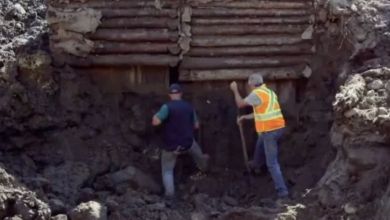
From postal worker to television figure: the journey and finances of Oak Island Rick Lagina Rick Lagina FINALLY Revealed How Much Gold He Has!
From postal worker to television figure: the journey and finances of Oak Island’s Rick Lagina
For more than a decade, Rick Lagina has been one of the most recognisable faces associated with the long-running search for treasure on Oak Island. The Michigan-born explorer, widely known through the History Channel series The Curse of Oak Island, has become a central figure in one of the world’s most enduring historical mysteries.
Yet Lagina’s path to international attention did not begin with archaeology or treasure hunting. Instead, it started with a far more ordinary career.
Early life and career
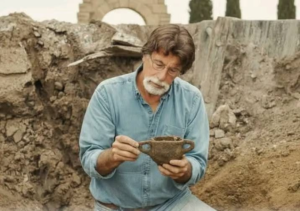
Rick Lagina was born on 25 January 1952 in Kingsford, Michigan, a small town in the state’s Upper Peninsula. Raised in a modest family, Lagina grew up surrounded by the natural landscapes and local folklore of the region. Friends and family have often noted that he developed an early interest in history and exploration.
Before becoming involved in the Oak Island investigation, Lagina worked for many years as a postal worker. The job provided stability but little connection to the historical curiosity that would later define his public image.


His fascination with Oak Island reportedly began after reading a Reader’s Digest article about the island’s famous “Money Pit”, a mysterious excavation site linked to centuries-old treasure legends. Over time, the story captured his imagination.
For decades, however, the interest remained little more than a personal fascination.
The Oak Island project begins
The turning point came in the mid-2000s when Lagina and his younger brother Marty Lagina decided to pursue the mystery more seriously.
In 2006 the brothers invested in Oak Island Tours Inc., gaining significant exploration rights to parts of the island off the coast of Nova Scotia. Their involvement marked a major shift in the modern search effort, bringing new funding and advanced technology to the long-running investigation.
While Rick focused on historical research and the organisation of exploration activities, Marty brought financial backing from his success in the energy industry. Marty Lagina had previously founded Terra Energy, a natural gas company that was later sold in a multimillion-dollar deal.
Together, the brothers combined enthusiasm, technical resources and modern surveying methods to pursue the mystery with a scale of investment not previously seen.
Television success
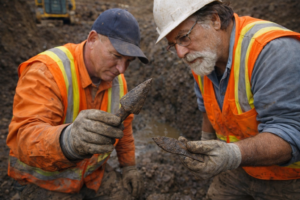
Public interest in their work grew rapidly after The Curse of Oak Island premiered in 2014. The documentary-style series follows the Lagina brothers and their team of researchers, engineers and historians as they explore theories surrounding the island’s history.
The show quickly developed a dedicated international audience, blending historical investigation with large-scale excavation projects and technological exploration.
Television exposure transformed the search from a relatively niche investigation into a global phenomenon. The programme has been broadcast in numerous countries and continues to attract viewers interested in archaeology, maritime history and treasure legends.
For Lagina himself, the series created new professional opportunities. Television appearances, public speaking engagements and related media projects have all contributed to his public profile.
Financial picture
Estimates of Rick Lagina’s personal wealth vary, but many sources place his net worth at roughly $10 million. Much of this income is believed to come from his role in The Curse of Oak Island, along with associated projects and appearances connected to the programme.
While significant, this figure is considerably lower than that of his brother Marty Lagina, whose business ventures in natural gas and renewable energy have reportedly generated far greater wealth.
Marty’s financial success has also played a major role in funding large parts of the Oak Island exploration effort. The investigation itself requires substantial investment in drilling equipment, excavation machinery, engineering teams and environmental compliance.
The cost of searching for history
Running a modern treasure investigation is expensive. Heavy machinery, drilling rigs and geological surveys can cost millions of dollars over the course of a single season.
In addition to the exploration itself, there are operational expenses such as transport, accommodation for crew members and safety procedures. Environmental regulations also require restoration work and careful monitoring to ensure the island’s ecosystem is protected.
Television production adds another layer of complexity. Filming crews, editing teams and historical consultants all form part of the programme’s extended workforce.
Despite these costs, the show’s popularity has helped sustain the project by generating revenue through broadcasting rights, advertising partnerships and international distribution.
Cultural and economic impact
Beyond television ratings, the Oak Island investigation has had a noticeable effect on the surrounding region of Nova Scotia.
Tourism linked to the programme has increased interest in the island and the nearby communities of Mahone Bay and Lunenburg County. Visitors from around the world travel to the area hoping to learn more about the legend that has captivated audiences for generations.
Local businesses, including hotels, restaurants and tour operators, have benefited from the influx of visitors drawn by the mystery.
A continuing mystery
Despite years of exploration and numerous discoveries of historical artifacts, the central question of Oak Island remains unresolved.
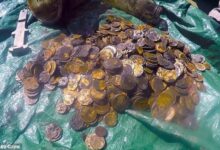
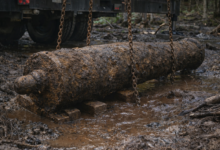
Coins, tools, pieces of timber and other objects have been recovered during excavations, suggesting that the island may have been visited or used centuries ago. However, definitive proof of a large hidden treasure has yet to emerge.
For Rick Lagina, the search appears to be about more than wealth. Throughout the series, he has frequently emphasised the historical puzzle at the heart of the island’s story.
Whether Oak Island ultimately reveals buried treasure, forgotten engineering works or simply a complex historical narrative, the investigation continues.
And for Lagina, a former postal worker whose curiosity turned into a lifelong quest, the journey itself has become part of the legend.