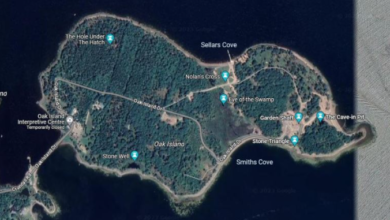
Oak Island: Rick Lagina Reveals Why the Oak Island Search Is Ending
Ancient Coins, Hidden Structures and a Mysterious Cave: Oak Island Team Moves Closer to the Truth
For more than two centuries, the small island off the coast of Nova Scotia has drawn explorers, historians and treasure hunters searching for answers to one of the world’s most enduring mysteries. Now, new discoveries made during the latest investigations on Oak Island suggest that the island’s history may be even older and more complex than previously believed.
In recent excavations featured in The Curse of Oak Island, the team led by brothers Rick and Marty Lagina uncovered a series of artifacts that are raising fresh questions about who may have visited the island centuries before the famous Money Pit was first discovered in 1795.
Clues Emerging at Lot 5
One of the most intriguing developments has taken place at an area known as Lot 5. Initially believed to be a possible residential site, archaeologists now suspect the location may have served as a storage or activity area connected to early operations on the island.


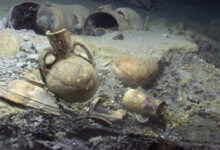
During excavations, researchers discovered fragments of red pottery embedded within a rock formation. Archaeologist Laird Niven suggested the pottery could date back to the 1600s, based on its glaze and design. Known as Redware, this type of ceramic was widely used in Europe and North America in the 17th and 18th centuries to transport goods.
If confirmed, the pottery would predate the earliest known digging associated with the Money Pit, suggesting that people were active on Oak Island long before the treasure legend began.
Additional ceramic fragments discovered nearby included coarse earthenware pieces, potentially even older than the Redware. Reconstructing the original vessels could provide valuable insight into how the area was used centuries ago.
Ancient Coins Raise New Questions
Metal detector expert Gary Drayton soon made another remarkable discovery while scanning the surrounding ground. At several flagged locations, the team unearthed multiple coins buried just beneath the surface.
The first coin appeared to be handmade rather than machine-minted, with a surface texture resembling ancient hammered currency. Shortly afterward, two more coins were discovered nearby, all sharing similar characteristics.
To determine their origin, the artifacts were taken to the Oak Island Interpretive Centre, where archaeometallurgist Emma Culligan conducted detailed tests using X-ray fluorescence and CT scanning.
The first coin was composed primarily of copper with traces of silver, making it unlikely to be Roman. However, its manufacturing style suggests it is still very old.
The second coin contained copper, tin and lead, a composition consistent with previously discovered Roman coins found on the island.
Perhaps the most surprising result came from the third coin. Emma’s analysis indicated it may be a French denier, a medieval coin that circulated around the 13th century. Its design resembled delicate chain-like patterns engraved into the surface.
If accurate, this discovery would support theories that European visitors, possibly from France, reached Oak Island centuries before recorded colonial settlement.
Evidence of Early Structures
The discoveries at Lot 5 did not stop with coins. Archaeologists uncovered a rectangular stone foundation and a circular depression outlined with rocks, both appearing to have been deliberately constructed.
Preliminary analysis suggests the circular feature may date back to the 1600s, while the rectangular structure likely dates to the mid-1700s. The layout indicates the later structure may have been built around an older feature already present on the site.
Pottery fragments, porcelain pieces and creamware ceramics found inside the foundation indicate that organized activity once took place there.
Archaeologists believe the location may have served as a staging area for transporting goods or materials, possibly connected to construction efforts related to the island’s mysterious underground structures.
Discoveries Beneath the Money Pit
While archaeologists worked at Lot 5, drilling operations continued near the Garden Shaft in the Money Pit area.
At depths between roughly 100 and 110 feet, drilling samples brought up several fragments of wood. These pieces may be remnants of an underground tunnel or support structure.
Chemical testing revealed traces of palladium in the wood samples. According to geoscientist Dr Ian Spooner, palladium is sometimes associated with gold refining processes, raising speculation that precious metals may exist nearby.
Further investigation focused on a large underground cavity known as “Aladdin’s Cave,” approximately 150 feet below the surface. Using a specialized camera and sonar equipment, the team lowered instruments into the chamber to examine its interior.
Although the water-filled cavity made visibility difficult, the footage revealed straight lines, broken edges and shapes that appear inconsistent with natural geology. Some researchers believe these features may indicate a man-made structure or tunnel entrance.
Challenges Continue
Despite the promising clues, the search remains far from straightforward.
Water intrusion continues to flood the Garden Shaft, forcing engineers to constantly pump out incoming seawater. The island’s complex flood tunnel system has long been one of the greatest obstacles for treasure hunters.
In addition, Canadian regulations have occasionally limited excavation efforts, particularly when historically significant artifacts are discovered.
Yet the Lagina brothers remain determined.
After more than a decade of exploration, each new artifact—from medieval coins to fragments of ancient tools—adds another piece to the puzzle.
A Mystery Still Unfolding
Whether Oak Island truly hides a legendary treasure remains uncertain. But the growing number of discoveries suggests the island played a role in events that may stretch back hundreds of years.
For Rick Lagina, the ultimate goal has never been only about gold.
“It’s about proving something important happened here,” he has said on the series.
And with every coin, fragment and hidden structure uncovered beneath the island’s soil, the possibility that Oak Island still holds a remarkable secret continues to grow.