Oak Island excavation halted after shaft collapse reveals hidden chamber deep underground
A dramatic incident during excavation work on Oak Island has revealed a previously undetected underground chamber, offering one of the most striking developments in the long-running search for answers beneath the small island off the coast of Nova Scotia.
The discovery came during Season 13 of The Curse of Oak Island, when an unexpected collapse inside the T1 shaft temporarily halted operations and forced the team to reassess the safety of their excavation. While the event posed real risks to the crew working at depth, it ultimately exposed a hidden void that had remained invisible to modern scanning technology.
For Rick and Marty Lagina and their team of engineers, archaeologists and geologists, the moment represented both a reminder of the dangers of deep excavation and a possible breakthrough in understanding the complex underground system believed to exist beneath the island.
A shaft under pressure
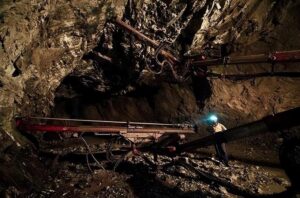
The T1 shaft had been identified earlier in the season as a key target for exploration. Data gathered from previous drilling, scanning and artifact discoveries suggested the area could be close to the centre of Oak Island’s mysterious underground network.




However, digging at such depths has never been straightforward.
Engineers monitoring the project had already noted unusual geological pressure around the shaft walls. Layers of soil, rock and sediment have been shifting for weeks as the excavation moved deeper, while the island’s infamous flood tunnel system continued to threaten progress with water intrusion.
By the time the team approached the lower sections of the shaft, conditions were becoming increasingly unstable.
According to members of the crew, the collapse happened suddenly. A deep shifting sound was followed by movement in the shaft casing, and debris quickly filled part of the lower excavation area.
Operations were immediately stopped as safety protocols were activated.
Although the collapse did not result in injuries, it forced the team to withdraw temporarily and evaluate the structural integrity of the shaft.
An unexpected revelation
Once the immediate danger had passed and engineers began assessing the damaged area, the team noticed something unusual in the newly exposed wall of the shaft.
Behind the collapsed material was not solid earth or rock, but a cavity.
The space appeared to run horizontally through the surrounding formation and, more importantly, showed signs that it had been deliberately constructed rather than formed naturally.
The walls of the cavity were shaped and aligned, suggesting human workmanship. Partially hidden within the void were several objects that had remained sealed behind the shaft wall for centuries.
For the team, the discovery was both surprising and significant.
Previous scans and drilling efforts had never detected this chamber. Its position behind a thick geological barrier had effectively concealed it from every technological method used during the investigation.
Artifacts recovered
Careful documentation and extraction of the objects followed.
Among the first items recovered was a piece of worked stone that appeared to have been shaped by hand. Experts examining the artifact noted that the craftsmanship resembled techniques used in medieval European construction.
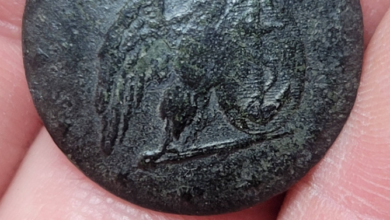
Another item was a small metal object bearing surface markings that may represent an inscription or symbol. The markings are still under study, but researchers believe they were intentionally engraved.
A third object, organic in nature and partially preserved by the sealed conditions of the cavity, may once have formed part of a larger structure or artifact. Specialists are currently analysing the material to determine its origin and age.
While none of the objects conclusively prove the existence of buried treasure, they provide further evidence that organised construction activity once took place deep beneath Oak Island.
A hidden design
Beyond the artifacts themselves, the discovery of the chamber has raised new questions about how the island’s underground system may have been engineered.
For decades, the island’s flood tunnels have been considered the most remarkable feature of its design. These channels are believed to have been created to allow seawater to flood any shaft that reached certain depths, effectively preventing excavators from reaching whatever lies below.
However, the newly discovered horizontal cavity suggests a different layer of strategy.
Rather than simply flooding excavation attempts, it appears that parts of the underground system may have been intentionally hidden behind walls or geological barriers, making them impossible to detect without physical disruption.
If this is the case, researchers believe there could be more hidden chambers concealed in similar ways.
A moment of reflection
For Rick Lagina, who has often spoken about the deeper historical significance of the search, the discovery carried emotional weight.
For more than a decade he has argued that Oak Island’s mystery is not simply about treasure but about proving that a major historical operation once took place there.
Standing at the edge of a shaft that had just collapsed, and looking at artifacts that had remained unseen for centuries, the moment seemed to validate that belief.
His brother Marty, meanwhile, immediately turned to the practical implications of the find—how the chamber might alter the excavation strategy and what it might reveal about the surrounding structures.
A mystery still unfolding
The collapse in the T1 shaft may have been a dangerous setback, but it has also opened a new chapter in the investigation.
For the Lagina brothers and their team, the hidden chamber is not merely a discovery—it is evidence that Oak Island’s underground system may be far more complex than previously thought.
And if one chamber remained hidden for centuries behind a single wall of earth, researchers now wonder how many more might still be waiting to be uncovered beneath the island.