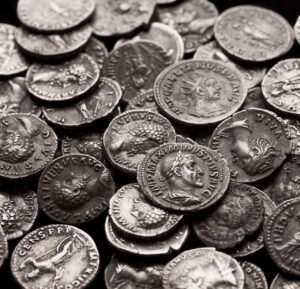
Oak Island Season 13 Episode 19: Roman Coin Proves Templar Link!
Season 13, Episode 19 of The Curse of Oak Island delivers yet another jaw-dropping discovery that may finally solve one of the island’s greatest mysteries. A Roman coin, dated between 250 and 270 AD, was unearthed on Lot 5, sending shockwaves through the team and viewers alike. This rare find, bearing the image of Emperor Claudius II, is the sixth Roman coin found on the island and it challenges everything previously believed about who may have visited Oak Island centuries before European explorers arrived.
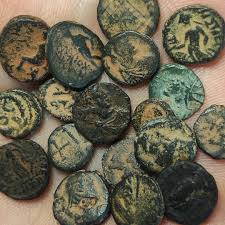
The discovery of this coin is not just an isolated find—it’s part of a larger, increasingly compelling pattern. The coin, heavily worn and corroded, was discovered by metal detectorist Katya Drayton in the southern section of Lot 5. Upon conducting an XRF scan, Emma Culligan, the team’s expert archaeometallurgist, confirmed its authenticity. The composition of the coin, which includes copper, iron, calcium, and silver, aligns perfectly with known Roman-era smelting methods. The coin, deeply embedded in the soil, shows signs of having been there for centuries, further suggesting its origin from a time long before the island’s modern explorers.
The real significance of this find, however, lies in the pattern it reveals. Lot 5 has already yielded several other notable artifacts, including Venetian glass beads from Normandy, lead tokens, and now, this sixth Roman coin. These items, each from a different era, point to a site that has been used and re-used across centuries by various groups—none of whom were supposed to be on Oak Island according to mainstream history. The fact that six Roman coins have been found in the same location raises the question: who brought them, and why?
The connection to the Knights Templar becomes increasingly hard to ignore. The Templars, known for their wealth and power during the medieval period, were also collectors of antiquities. As the team continues to uncover evidence of medieval and Roman objects, it becomes clear that Oak Island was not just a hiding place for pirate treasure, but rather a vault for significant relics accumulated over centuries. The Templars, with their vast maritime capabilities, are one of the few groups who could have navigated the Atlantic and buried their treasure on a remote island off the coast of Canada.


What sets this discovery apart from previous Roman coin finds on Oak Island is the matching chemical fingerprint between the coin and trace metals found in the water samples pumped from the Money Pit’s solution channel. This connection between surface finds and underground anomalies suggests that the treasure—or at least the materials—are linked, possibly buried by the same group, likely the Templars. The analysis of the coin’s metal composition confirms that this isn’t just a random artifact—it’s part of a larger, deliberate collection of treasures that spans multiple historical periods.
The evidence continues to mount in favor of the Templar theory. From the Roman coins to the medieval glass beads and lead strips, each piece adds another layer to the story. The discovery of a stone structure and the continued excavation of Lot 8, which has revealed a 700-year-old English bag seal, further supports the theory that the Templars may have used Oak Island as a safe haven for their most valuable treasures, hidden away from the authorities who sought to destroy them.
While the Templar connection seems more plausible than ever, the question remains: what exactly did the Templars leave behind on Oak Island? Was it just treasure, or did they hide something more significant, such as sacred relics, documents, or knowledge that could reshape history? As the excavation progresses, it seems that each new artifact brings the team one step closer to answering that question.
In the context of the Curse of Oak Island, this Roman coin is not just another intriguing find—it’s a potential game-changer. It’s evidence that connects Oak Island to a much older, much more mysterious past. The more the team uncovers, the clearer it becomes: Oak Island was not just a treasure site for one group or one era—it was a crossroad for multiple civilizations, each leaving their mark on the island’s history.
With the stakes higher than ever, the team presses on, knowing that the Roman coin could be the key to unlocking Oak Island’s most closely guarded secrets. As the season progresses, the evidence continues to align, and the possibility of revealing the truth behind the Templars’ connection to the island grows stronger. What will the next discovery bring? Only time—and further excavation—will tell.