Gold Rush Gamble: Inside the Strategic Battles Driving a High-Stakes Mining Season
Gold Rush Gamble: Inside the Strategic Battles Driving a High-Stakes Mining Season
In the frozen wilderness of the Yukon, as the ice retreats and rivers begin to flow again, the miners of Gold Rush return to their claims with new ambitions, new machinery — and familiar tensions. But beneath the noise of diesel engines and the glitter of freshly washed gold, what’s unfolding is not merely a search for fortune. It’s a masterclass in leadership, resource management, and strategic risk-taking under crushing pressure.
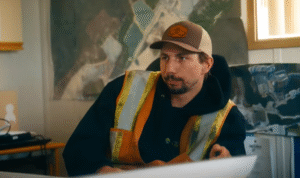
For Parker Schnabel, one of the show’s youngest but most relentless miners, the new season begins not with celebration but with calculation. “We’re going to do 10,000 ounces this year,” he declares. It’s not a boast but a mandate — a line drawn in the permafrost. To achieve that, he’s betting on an aggressive plan: four wash plants running simultaneously, each one a logistical puzzle in itself.
From a strategist’s perspective, Parker’s approach is classic expansion under constraint — scaling up output to chase economies of scale, but doing so with finite resources and limited time. His water license at Sulphur, the legal lifeline that allows him to wash gold from creek beds, expires in ten weeks. That ticking clock turns every operational delay into a potential disaster.


In corporate terms, Parker is running a high-risk, high-reward play: simultaneous diversification and concentration. He’s spreading his assets across multiple sites to increase total yield while relying on a thin management structure led by his lieutenants, Mitch Blaschke and Tyson Lee. “People who can’t do their job, we need to fire,” he tells them bluntly. “We want the best of the best.” It’s a ruthless but necessary stance when every hour of uptime translates directly into ounces of gold.
Across the valley, Tony Beets — the veteran kingpin of Gold Rush — is pursuing a different strategy, one grounded in experience and calculated timing. He’s gambling on an early-season push to capitalize on record-high gold prices. Within two weeks, his team hauls in $1.5 million worth of gold, a record even for the Beets family empire. “That justifies what we’re doing,” he says, not with arrogance but conviction.
Tony’s approach is textbook first-mover advantage. By mobilizing early, he mitigates the risk of mid-season breakdowns and capitalizes on a narrow window before competitors hit full stride. His family team — Mike, Monica, and Kevin — embody the generational transition in small-scale industrial enterprises. Mike dreams of his own mine, but Tony, the patriarch, keeps him grounded. “Not making any promises until I have that in place,” he says. It’s a lesson in measured ambition: seize opportunity, but never overextend.
Meanwhile, Rick Ness faces a more precarious situation. Still waiting for his water license, he’s forced to relocate his operation to Lightning Creek, hoping the new ground will yield enough gold to save his season. His test results, however, come up short: just 0.525 grams from a two-yard sample — half of what’s needed. “No place to mine,” Rick laments. “We’re screwed.” From a strategic lens, Rick’s operation exemplifies the dangers of dependency on regulatory and environmental factors — the kind of external risk that can derail even a sound operational plan.
But perhaps the most telling story this season is one of human error and resilience. At Paradise Hill, a brand-new $750,000 rock truck flips over the edge of a 200-foot drop with driver Graham trapped inside. The incident could have been catastrophic. Yet Tony Beets’s reaction — calm, methodical, and notably forgiving — reveals a deeper truth about leadership in volatile industries. “There’s no use firing people for this,” he says. “When you fire somebody, two people lose — I lose an employee; he loses his job.” It’s a philosophy rooted in pragmatic empathy, rare in environments defined by competition and stress.
From a strategic viewpoint, the miners’ contrasting approaches mirror broader business archetypes: Parker’s aggressive scaling, Tony’s disciplined opportunism, Rick’s adaptive desperation. Each man is navigating the same constraints — time, weather, regulation — but their outcomes hinge on how they balance risk and control.
Gold, in this world, is both the prize and the metaphor. It represents not only material wealth but the measure of resilience under uncertainty. In the Yukon, failure is as natural as the frost — and survival depends on how fast you can dig your way back.
As engines roar and sluices run, one truth remains: in the pursuit of gold, the richest resource is still human judgment.