“Farming is already a battle against mud, rain, and broken machinery,” says Clarkson.
In the rolling hills of rural Britain, a new storm is brewing — not one of weather, but of policy. The government’s proposed tax reform, aimed at tightening inheritance and business property relief, has provoked a rare alliance between small business owners and farmers. Both groups argue the plan would punish the very people who keep the nation’s economy rooted.

“I’m here to support the farmers — it’s that simple,” said one business owner at a rural rally this week. “If the government wanted to target big-city investors, they’d use a sniper rifle. But instead, they’ve used a blunderbuss — and they’ve hit us all.”
The metaphor, colourful yet revealing, captures a wider frustration. Many rural entrepreneurs say the reform was rushed, poorly communicated, and fundamentally misunderstands the structure of family-run enterprises.
Under current rules, farmers and small business owners benefit from Business Property Relief (BPR), a system allowing assets to be passed down without heavy taxation. The new proposal would limit or remove much of that protection — meaning the next generation may have to sell land, equipment, or livestock simply to pay the tax bill.
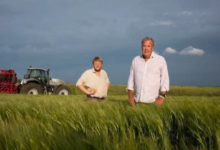

“I’ve built my business since I was sixteen,” said another. “Now, if I want to pass it to my son, he’ll face a tax so large he might have to sell two tractors to cover it. How is he supposed to make a living after that?”
A Clash Between Policy and Practicality
Agricultural analysts warn that the government’s plan reflects a growing disconnect between Westminster and rural Britain. Farming, they argue, is unlike most industries: its profits are seasonal, its risks are immense, and its capital assets — land, machinery, livestock — cannot easily be liquidated.
“Farms aren’t just businesses,” explains Dr. Helen Rowcroft, an agricultural policy expert at the University of Exeter. “They are generational enterprises. When you impose inheritance taxes without flexibility, you’re not taxing wealth — you’re dismantling continuity.”
This concern extends far beyond the farm gate. Medium-sized enterprises in manufacturing, construction, and logistics — all of which often operate in rural or semi-rural areas — would also be affected. Critics describe the reform as a “blanket approach” that fails to distinguish between speculative capital and productive investment.
Economic Ripple Effects
The UK’s small and medium-sized enterprises (SMEs) account for over 99% of the country’s business population and employ more than 16 million people. Economists warn that if inheritance taxes force succession sales, local economies could lose not just assets but employment and skills that have been nurtured over decades.
“The rural economy doesn’t just feed us,” says Rowcroft. “It sustains local trades, schools, and services. If family farms collapse under tax pressure, it creates a domino effect — land consolidation, depopulation, and the loss of heritage industries.”
Even some within government have privately conceded that the decision may have been made too hastily. “It was a very rushed, last-minute decision,” one supporter of the reform acknowledged off record. “Perhaps it’s time to admit we’ve got this one wrong.”
Between Reform and Retreat
For now, the Treasury insists the changes are essential to ensure “fairness in the tax system” and prevent loopholes exploited by the wealthy. Yet, the optics of taxing farmers at a time of rising costs, labour shortages, and post-Brexit uncertainty have left ministers politically exposed.
The public’s sympathy seems firmly on the farmers’ side. Across rural communities, small-business owners are beginning to view this tax not as reform but as a rupture — one that could sever the generational bonds sustaining Britain’s countryside.
As one farmer put it plainly: “They talk about levelling up. But how can you level up a nation by pulling down its roots?”