Oak Island’s “Billion Dollar Baby”: Ancient Coin Discovery Rekindles the Hunt for Hidden Treasure
Oak Island’s “Billion Dollar Baby”: Ancient Coin Discovery Rekindles the Hunt for Hidden Treasure
The mystery of Oak Island deepened once again in Season 13, Episode 2 of The Curse of Oak Island, aptly titled “Billion Dollar Baby”. As the Lagina brothers and their team resumed their relentless hunt for the elusive treasure believed to lie beneath Nova Scotia’s most infamous patch of land, a series of discoveries reignited both excitement and skepticism across the fan community.
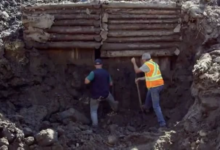
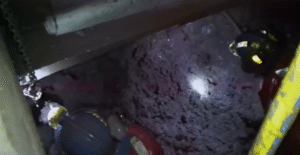
The episode opened at the Money Pit, the symbolic heart of the Oak Island legend, where drilling resumed on borehole J-9. Reaching a depth of 158 feet, the team encountered fragments of limestone — a sign they were nearing the “Solution Channel”, the geological layer thought to conceal traces of precious metals. Despite finding no immediate evidence of treasure, the team’s determination remained unshaken.


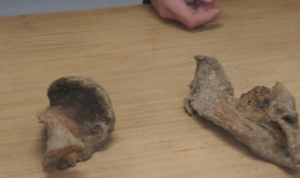
Meanwhile, on Lot 5, a site that has increasingly captivated both viewers and archaeologists, metal detectorist Katya Drayton and veteran treasure hunter Marty Lagina worked to unearth signals beneath massive rocks. What began as a simple metallic hit led to a painstaking excavation, yielding an iron fragment with an attached fastener, later analyzed by archaeometallurgist Emma Culligan. Her conclusion — that the piece dated back to the 1700s and may have been cookware — added another piece to the historical puzzle of Oak Island’s past human activity.
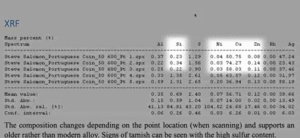
But it was the coin revelation that truly dominated the episode’s narrative. Numismatist Sandy Campbell authenticated a Portuguese Torne Escudo, minted between 1367 and 1383, discovered in the Money Pit. His astonishment was palpable: the coin appeared uncirculated, possibly having rested untouched in a chest for centuries. Its near-pristine condition and composition — silver, nickel, and zinc — mirrored the metallic traces previously detected in surrounding soil and water samples. Campbell estimated its value at $25,000–$35,000, prompting Marty Lagina to quip that a chest full of such coins could indeed be worth a billion dollars — giving rise to the episode’s title.
As the investigation progressed, the team returned to Smith’s Cove, where Gary Drayton uncovered a refashioned iron hook and a 17th-century Rosehead spike. Each artifact, while small, hinted at purposeful engineering beneath the island — possibly remnants of the fabled underground structures that have long captured the public imagination.
The episode’s emotional crescendo arrived with another find on Lot 5: a hammered coin, possibly pre-1600s, bearing a faint cross. Gary Drayton’s excitement was unrestrained — the area has already produced several Roman coins, and this new discovery could add weight to the theory of pre-Columbian contact or even ancient European presence on Oak Island.
In his post-episode commentary, Daniel Spino of The Oak Island Compendium offered a measured but intriguing analysis. He cautioned that “a single coin cannot prove treasure,” emphasizing the need for multiple coins of similar origin found in the same context to strengthen any claim. Yet, he pointed to a 1966 Register article referencing Robert Dunfield’s excavations and the alleged discovery of multiple Short Cross coins by James Troutman — potentially English silver pennies from the late 12th to early 13th centuries. If verified, these finds could dramatically alter the historical timeline of Oak Island’s occupation.
For now, as the Laginas prepare to test new soil samples from the heart of the Money Pit and await the results of the latest coin analysis, Oak Island remains what it has always been: a place where science meets legend, and every artifact unearths more questions than answers.
Whether the “Billion Dollar Baby” lies buried beneath layers of rock and time remains to be seen. But one thing is certain — the mystery of Oak Island continues to captivate, promising that the next shovel of dirt might finally unearth the truth that has eluded searchers for over two centuries.