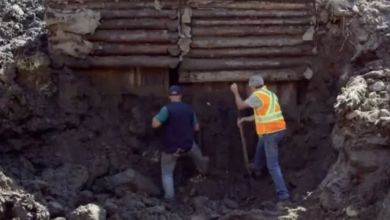
Francis Bacon’s Secret Map Beneath Oak Island — the clue that could change everything we thought we knew
In the enduring mystery of Oak Island, few discoveries have stirred as much fascination as the recently decoded inscriptions connected to Nolan’s Cross. In Part II of “The Mystery of Nolan’s Cross: Quam Patent, Plura Latent”, researcher Daniel Spino of The Oak Island Compendium continues his painstaking investigation into what he believes are encrypted messages left by early explorers — and possibly by the Elizabethan philosopher Sir Francis Bacon himself.
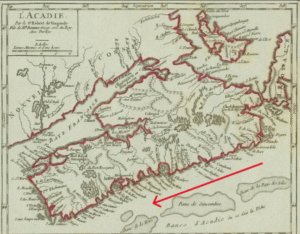
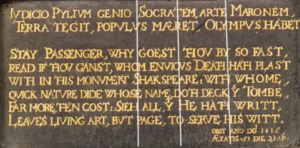
The latest analysis begins with a hidden message found within a centuries-old plaque, decoded through letter-for-letter rearrangements that, according to Spino, reveal detailed instructions. The text begins with:
“APPRENTICE, GO WEST ACROSS SEA, MAKE TO MY ELEPHANT ISLAND.”
The phrase, he explains, may represent directions to a secret destination across the Atlantic — one resembling an elephant in shape. To Spino, that description fits none other than Oak Island, situated at roughly 44 degrees latitude, whose distinctive outline has long drawn attention from researchers and treasure hunters alike.



The term “Paget”, an archaic word for a young apprentice or initiate, hints at a Masonic or Rosicrucian disciple being guided westward. The symbolism of the “elephant” and the “obelisk” — key elements in esoteric traditions — suggests a deeper ritualistic or initiatory meaning behind the voyage.
As the message unfolds, the text instructs the reader to search “in Acadia, turn before La Heve, and look to the west shore.” These references point directly to Mahone Bay in modern-day Nova Scotia. On its western edge sits Oak Island — the only elephant-shaped island in the region. Spino notes that the renowned explorer Samuel de Champlain mysteriously left Mahone Bay off his maps, possibly to conceal something of great significance.
Within the plaque’s third section, further codes emerge:
“DOM HEKAL, TH TH TH, EHYEH, TT.”
“DOM HEKAL,” Spino explains, translates from German and Hebrew to ‘Temple Dome’, suggesting a Tholos — a beehive-shaped structure used in ancient Greece as a temple or tomb. He theorizes that such a domed chamber, perhaps built by Bacon’s followers or early Freemasons, may once have existed beneath Oak Island.
The sequence “TH TH TH” alludes to the Triple Tau, a sacred Masonic emblem symbolizing the Temple of Jerusalem and the Holy Trinity. The Hebrew word EHYEH, meaning “I Am”, echoes divine authorship — a potential codename for Bacon’s secret project.
The final clue, “T.T.”, may not simply refer to the publisher Thomas Thorpe of Shakespeare’s First Folio. Spino and fellow researchers like Peter Dawkins propose it as a cipher for the number 33, associated both with Jesus Christ and with Francis Bacon, blending numerology, faith, and esoteric knowledge into one signature mark.
A more startling revelation arises from the plaque’s last line:
“HO, MUST MOW, LAPIS BARES TIP TO SWAN HEART, SHAFT WITH MY TOMB, SEE ME HOME-TTT.”
To Spino, this describes a precise map — directing the initiate to clear land (“must mow”) and follow a stone (“lapis”) pointing toward the heart of the Swan constellation, Cygnus, mirrored in the P Cygni Boulder on Oak Island. Beneath that point, he suggests, could lie a shaft leading to Bacon’s Vault — his symbolic “home.”
The phrase “SEE ME HOME-TTT,” encoded with the triple Tau once again, implies that the final resting place of Bacon — or the repository of his most guarded work — might lie under that very ground.
Spino notes that within the Bacon Triangle engraved on the plaque, more hidden messages appear to exist, embedded geometrically rather than alphabetically. These shapes, he believes, may contain names of those linked to both the Shakespeare authorship mystery and the Oak Island enigma.
While skeptics remain cautious, the intricate web of languages, symbols, and historical references uncovered by Spino and his collaborators — Charlotte Wheatley and Christopher Morford — offers a compelling narrative that bridges Renaissance philosophy with North American legend.
For the Oak Island Compendium team, this is not mere speculation. It is, as Spino writes, “a trail left by minds that thought in geometry, spoke in symbols, and hid truths meant to be found centuries later.”
Whether Oak Island conceals Bacon’s lost manuscripts, Masonic relics, or something even older, one truth remains: the deeper researchers dig — in both soil and language — the closer they seem to come to a secret that refuses to stay buried.