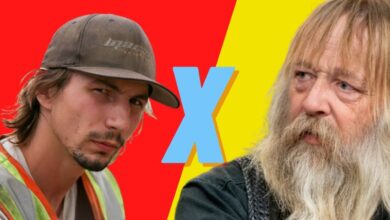
Parker Schnabel and the Yukon Talent Race: Inside the Strategy Driving His Season 16 Ambitions
For more than a decade on Gold Rush, Parker Schnabel has been defined not only by his youth and work ethic, but by his relentless drive to expand. Each season, the Alaskan miner has pushed harder, dug deeper and scaled his operation to levels few in the industry attempt. But in Season 16, viewers are witnessing a different kind of ambition — one built not on new machinery or larger cuts, but on people.

In the opening episodes of the season, Schnabel made headlines within the mining community by securing a major recruitment move: hiring Brennan Ruault, a well-known member of the Beets crew. The decision sent ripples through the Yukon, where labour shortages and worker loyalty have always shaped the dynamics between competing operations.
But the early-season shift appears to be only the beginning. Rumours continue to circulate that Schnabel is eyeing another recruit — Buzz Legault, a miner who has served on both Fred Lewis’s and Rick Ness’s crews. Legault has a reputation for versatility and calm under pressure, traits that have earned him respect across camps.
Schnabel’s pursuit of top-tier talent reflects a growing trend in his approach. Mining gold, especially at the scale he aims for, is not just a technical operation but a human one. With gold prices high and operating costs rising, the margin for error is shrinking. A reliable, experienced team is no longer a luxury; it is the backbone of a successful season.



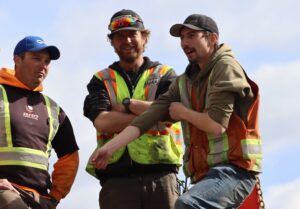
“Building a strong crew matters as much as buying the right machines,” Schnabel says in the episode.
Unlike many of his competitors, Schnabel has never been shy about shaking up his workforce. Where others might see risk in recruiting high-profile miners from rival crews, he sees opportunity — a chance to add both skill and strategic advantage.
Ruault’s arrival immediately strengthens Schnabel’s roster. A seasoned operator with years of experience under Kevin Beets, he brings knowledge of large-scale operations and the discipline required for high-production mining. His familiarity with unexpected challenges — mudslides, wash plant failures, equipment breakdowns — makes him a valuable addition to any crew.
But Legault, if he joins, could be a turning point. Known for stepping into difficult situations and keeping morale steady, he fits the type of miner Schnabel has been trying to bring in: adaptable, unflappable and capable of leading if needed.
Behind the recruitment strategy lies a bigger objective. Schnabel has set his sights on a target that once seemed beyond reach — producing 10,000 ounces of gold in a single season. It is a number that demands constant movement, fast decisions and a workforce capable of functioning almost seamlessly under pressure.
Achieving that goal requires more than simply running machines longer or digging deeper cuts. It means optimising every part of the operation: reducing downtime, improving coordination between sites, maintaining high recovery rates and anticipating problems before they become crises.
For Schnabel, talent is the linchpin.
A strong crew can execute complex plans, adapt when conditions shift and keep production steady even when setbacks appear. A weak crew, by contrast, can cause bottlenecks that ripple across the entire operation.
The Yukon has always been a region where mining success is shaped as much by people as by geology. Harsh conditions, logistical challenges and unforgiving weather make teamwork vital. Veterans know how to work quickly when the window of opportunity is small. They also know how to recognise subtle warning signs — a vibration in the ground, a change in water flow, a moist seam in the gravel — that inexperienced miners might miss.
As Schnabel expands his roster, he must also navigate the challenges that come with growth. Adding multiple experienced miners to a single operation can create friction. Each miner brings their own style, rhythm and expectations. Managing these differences requires leadership and communication — qualities Schnabel has been developing since taking over his family’s mine at just 16 years old.
Yet this season, he appears more prepared than ever. His decisions are measured, his confidence steady. He knows the stakes: every ounce counts, and the competition is fiercer than in previous years.
Tony Beets faces environmental setbacks.
Rick Ness is searching for a game-changing new claim.
Kevin Beets is trying to establish his leadership independently.
In this landscape, Schnabel’s recruitment strategy is a calculated attempt to stay ahead.
Whether he reaches the 10,000-ounce mark remains to be seen. But what is clear is that Gold Rush is witnessing a shift. The competition is no longer only about who has the biggest machines or the richest ground — it is about who can build the strongest team.
For Parker Schnabel, Season 16 may well be the season where people become his greatest resource.