Freddy Dodge and Juan Ibarra Trace Oregon’s Lost Gold and the Forgotten Power of Hydraulic Mining
Freddy Dodge and Juan Ibarra Trace Oregon’s Lost Gold and the Forgotten Power of Hydraulic Mining
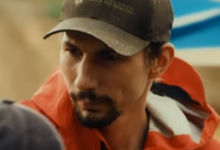
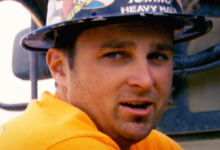
At the historic Sumpter Dredge in eastern Oregon, gold miners Freddy Dodge and Juan Ibarra expected a routine assessment of a struggling operation. Instead, what they found was a landscape scarred by 19th-century hydraulic mining—an industrial force so powerful it reshaped the hillsides and may still be hiding gold deep within fractured bedrock.

Their mission was to help miner Tyler Beer, whose operation had been steadily failing. What appeared at first to be a simple case of poor pay dirt soon revealed a far older story—one that stretched back to the 1860s, when high-pressure water cannons known as “monitors” blasted entire mountainsides apart in search of gold.
“When we walked the ground, it was obvious something big had happened here,” Dodge recalled. “Material was missing. Tailings were nowhere in sight. This wasn’t natural erosion.”
The conclusion came quickly: the site had been hydraulically mined more than a century ago.

A Violent Past Unearthed

Hydraulic mining dominated western goldfields between 1853 and 1884. Miners channelled immense volumes of water through iron monitors—gravity-powered cannons capable of tearing apart thousands of tonnes of earth. The displaced material washed into sluice lines, where gold settled and everything else flowed downstream.
Many of these monitors still remain scattered across Oregon’s mining districts. For Dodge and Ibarra, seeing one rusted remnant on the mountainside confirmed what they had suspected.
“This was their excavator, their dozer, their whole operation,” Ibarra said. “Just water and gravity. And they probably had more power than some modern pumps.”
But hydraulic mining came with a hidden consequence. Gold-rich gravels, once blasted loose, often washed into deep cracks in the bedrock—places old-timers couldn’t access and modern miners rarely think to check.
“You can see the fractures,” Dodge said, pointing to exposed bedrock. “Gold hits a crack and drops in. They would have missed it.”
For Tyler Beer, whose season was on the brink of collapse, this forgotten bedrock became a last lifeline.
A Breakthrough in the Bedrock
The test pan told the story. Gold—more than a dozen bright colors shimmering in the sunlight.
“This excites me,” Ibarra said. “I’d run all this.”
Beer needed at least 0.44 ounces to save his operation. After reworking material in the bedrock, the cleanout delivered a remarkable 0.77 ounces—a nearly 600% improvement and enough to turn his season around.
The relief was immediate. “That’s going to save my season,” Beer said, visibly emotional.
For Dodge and Ibarra, who spend most of the year on the road helping small miners stay afloat, it was a moment of quiet reward.
“The payoff,” Dodge said, “is when we see someone’s situation change for the better.”
When Old Mistakes Threaten New Miners
Their Oregon intervention was not the only rescue that relied on technical improvisation. In 2021, they answered a call from the Scott family in Montana—another operation battling equipment failures, inconsistent feed, and one of the most challenging materials miners dread: heavy clay.
Clay, often called a “gold thief,” can trap fine gold particles and carry them straight out of the sluice box. At the Scott mine, it was everywhere.
“That pan feeder was absolutely useless,” Dodge said bluntly. “It packed tight, plugged solid, and buried rocks that destroyed the rollers.”
Within an hour of operation, the entire system seized. Clay had overwhelmed the hopper, the sluice, and the wash plant.
“At the rate they were going,” Ibarra said, “they were losing money every minute.”
The lesson, according to Dodge, is one that echoes across small mining operations throughout the West: the wrong feeder, the wrong setup, or the wrong material can sink an entire season.
A Continuing Battle for Small Miners
Mining today is a complex balance of geology, engineering, and improvisation. Many small operators lack the equipment or expertise to navigate these challenges, especially on ground previously worked by 19th-century miners whose techniques were efficient but imprecise.
Hydraulic mining, in particular, left behind chaotic landscapes—washed-out slopes, displaced gravels, and pockets of gold trapped where no miner has touched them in 150 years.
For Dodge and Ibarra, unravelling these historical layers is now routine.
“You start putting pieces of the puzzle together,” Dodge said. “The land tells you what happened.”
And, sometimes, it still has gold left to give.