Oak Island Mystery Deepens: Is This Coin the Key to the Money Pit?
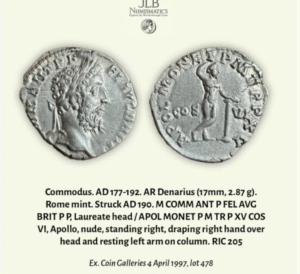
Oak Island, Nova Scotia – A remarkable discovery on Oak Island has once again intensified speculation about the island’s mysterious past. A team led by Rick and Marty Lagina has unearthed a Roman coin dating back to the third century AD, adding a surprising new layer to the decades-long search for treasure on the island.
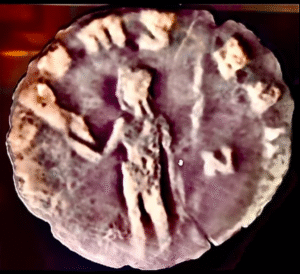
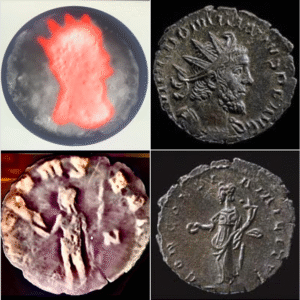
The coin was found by Marty Lagina and Katya Drayton on Lot 5, a site previously known for yielding five other Roman coins that could be as much as 2,000 years old. “This is the part of this whole venture I like, honestly, the most,” said one team member, expressing the excitement surrounding the find. The coin was subsequently scanned using a CT machine to better analyse its details, revealing markings that identify it as originating from the workshop of Claudius II, a Roman emperor who reigned from 268 to 270 AD.
Experts confirmed the coin’s authenticity, noting that its excellent condition is remarkable for an object buried for centuries. Sandy Campbell, a specialist in ancient coinage, explained that Roman coins were in circulation well into the 1500s, which could account for how it ended up on Oak Island. “Who brought it here is a different story,” he said, suggesting that the coin may have traveled via European trade networks or been carried by individuals involved in early colonial activities or even the construction of the legendary Money Pit.
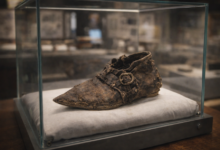
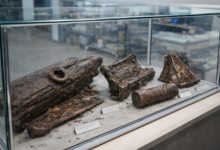
This discovery raises questions about the historical timeline of Oak Island, where there has been no prior evidence of Roman-era habitation. The finding fuels ongoing debates about whether multiple groups may have used the island over the centuries, possibly hiding valuables or conducting secretive operations.
The Lot 5 site has become a focal point for these investigations. Archaeologist Fiona Steele, working alongside the Lagina team, has uncovered fragments of large earthenware bowls, likely used for food storage or preparation, which she estimates date back to the 17th or 18th century. These discoveries indicate a pattern of multi-generational activity on the island and hint at the complexity of its historical usage. “Every piece adds to the puzzle and tells us more and more,” Steele said, reflecting the meticulous nature of the ongoing excavation.
The Roman coin, together with other artifacts such as Venetian trade beads and buttons, has prompted the team to consider possible connections with the Knights of Malta, a religious military order descended from the Knights Templar. Previous investigations in Europe revealed similar Roman coins at sites associated with the Templars from the 12th to 14th centuries, suggesting that Oak Island may have been part of a much larger network of secretive operations.
Rick Lagina emphasised the importance of continuing to investigate Lot 5 and surrounding areas. “We need to rededicate ourselves to continue to look intensively at Lot 5, the adjacent lots, and the Money Pit for irrefutable proof,” he said. The team hopes that ongoing excavations will yield further evidence linking the Roman coins and other artifacts to historical treasure caches or settlements.
For centuries, Oak Island has captivated treasure hunters and historians alike. The island is most famous for the Money Pit, a shaft whose origins and purpose remain uncertain, and for numerous unverified claims of hidden riches. The discovery of Roman coins adds a layer of historical intrigue, suggesting that the island may have been visited or utilized by people from across the globe long before European colonisation.
While the origins and purpose of these coins remain speculative, the Lagina team’s methodical approach ensures that each find is carefully documented and analysed. As Campbell noted, “It’s mind-numbing that this stuff continues to get unearthed.” The blend of archaeological evidence and historical research continues to make Oak Island a unique site for both amateur and professional treasure hunters.
As the search continues, each new artifact fuels speculation about who might have visited the island over the centuries and what treasures may still lie beneath its soil. For now, the Roman coin serves as a tangible link to a past that is both distant and enigmatic, reinforcing Oak Island’s reputation as one of North America’s most enduring mysteries.
With the discovery of the Claudius II coin and accompanying artifacts, Oak Island once again proves that its history is far richer and more complex than anyone had imagined. The Lagina team’s ongoing investigation promises to shed further light on the island’s past, and possibly, one day, reveal the secrets of the elusive Money Pit.