The Curse Of Oak Island: Lot 5 Discovery Might Be the Closest Link to the Treasure Yet
Oak Island: New 17th-Century Artifacts Deepen Mystery on Lot 5
For years, Lot 5 has been one of the most perplexing corners of Oak Island. Situated just east of where six Roman coins were discovered, the area has produced evidence suggesting that European visitors could have reached the island centuries before the Money Pit was unearthed in 1795. Now, a new series of findings is raising even more questions about who was here—and why.
This week, Rick Lagina, Gary Drayton, and members of the team returned to the middle of Lot 5 to investigate a cluster of signals detected during previous metal-detecting sweeps. Their first discovery was a curious elongated lead object, surprisingly heavy for its size. Drayton immediately noted its similarity to earlier lead artifacts, including the medieval lead cross analysed several seasons ago. The team quickly bagged the object, aware that Emma Culligan’s scanning techniques could reveal composition clues invisible to the naked eye.
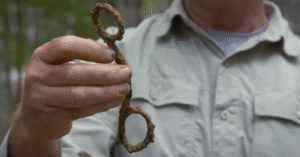
But the day’s most intriguing moment came shortly afterward, when the metal detector signalled again. Digging carefully, Gary uncovered two pieces of corroded iron. At first glance they resembled fragments of old scissors or shears, but their rough construction and shape led Gary to suggest they might instead be part of a horse bridle—a surprising idea given that historical records show Lot 5 was never used for farming or grazing.
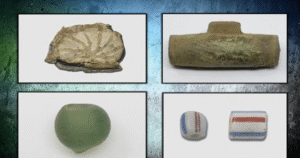



To resolve the debate, the finds were taken to the Oak Island research lab. There, archaeologist Laird Niven and materials analyst Emma Culligan conducted a full metallurgical and stylistic examination. Their verdict overturned the initial theory. The pieces were not horse tack, but instead two halves of iron shears used in the late 17th or early 18th century. Cross-section scans showed that although the fragments shared a common break, they were forged differently—one square in profile, the other rectangular—consistent with handmade shears of the period.
Chemical analysis revealed traces of chlorine and sodium, indicating prolonged contact with seawater. The iron showed minimal impurities, suggesting it was produced before the widespread adoption of blast-furnace technology. Emma compared the pieces with historical examples and found a nearly identical match to shears used in the UK during the mid-1600s.
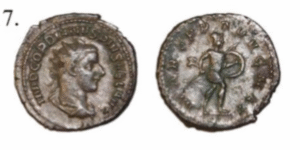
While the discovery does not directly connect Lot 5 to the construction of the Money Pit, it deepens the historical puzzle. The presence of Roman coins, medieval lead, and now 17th-century European tools suggests repeated activity long before the island’s recorded settlement. Rick Lagina described Lot 5 as one of the two most difficult places on Oak Island to interpret—the other being the Money Pit itself.
“Every artifact tells a story,” he said. “And even if one find is puzzling in the moment, the next one might help explain it.”
With new signals still waiting beneath the soil, the team has already returned to the site. The search continues, and with Lot 5 producing some of the island’s oldest and most unexpected evidence, the next discovery may push the mystery further back in time than ever imagined.