Roman Coins Deepen Oak Island’s Oldest Mystery
Oak Island’s tangled history has added yet another perplexing layer, as members of the Lagina team confirmed the discovery of another Roman coin—this time linked directly to Emperor Claudius II, dating from approximately AD 268 to 270. The find intensifies a longstanding question: how did objects predating European presence in North America by more than a millennium end up on a small island in Nova Scotia?
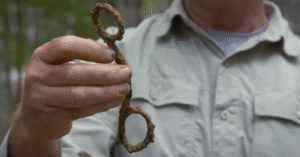
The latest discovery occurred on Lot 5, an area that has increasingly emerged as one of the most significant archaeological zones on the island. The coin was first spotted by Marty Lagina and metal-detecting expert Katya Drayton, who immediately noted its unusual design. A CT scan conducted in the lab revealed a standing figure, clear lettering associated with the ninth workshop—officina novem—and on the obverse, a distinctive crowned bust with a sharp nose and chin. Archaeologist Emma Culligan confirmed that these features are characteristic of Claudius II.
“It’s ancient,” team members exclaimed as the scan images appeared. The reaction reflected not only excitement, but also disbelief. Roman artifacts are virtually unknown in verified Canadian archaeological contexts. To date, no evidence exists of habitation on Oak Island—or anywhere in Atlantic Canada—dating back to the Roman period.
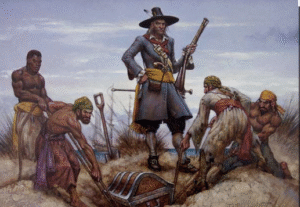
Coin expert Sandy Campbell later examined the artifact in the Research Center. His assessment was unequivocal: “This is clearly Roman Empire period. The condition is remarkable.” Campbell also noted that Roman coins continued circulating as currency into the 1500s, often used widely across Europe. That raises the possibility that workers involved in early operations on the island—possibly those connected to the creation of the Money Pit—may have carried such coins with them.

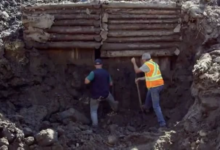

Doug Crowell, the team’s historical researcher, expanded the theory. Roman coins have repeatedly been found in places associated with the Knights Templar, including Iceland. “The elite and the monastic military orders gathered wealth from all over the world,” he said. “If the Templars transported treasure or knowledge across the Atlantic, these coins could easily have been part of it.”
Meanwhile, ongoing excavations on Lot 5 continue to complicate the narrative. Archaeologist Fiona Steele and her team uncovered pieces of a large, ornate earthenware bowl that likely dates between the 1600s and 1800s. No historical record suggests any settlers lived on Lot 5 during that period. Taken together with Venetian trade beads, military-style buttons, and multiple phases of soil disturbance, the findings point toward “multigenerational activity,” as Steele describes it.
The discoveries raise more questions than answers. Who visited Lot 5, and when? Did European explorers, religious orders, merchants, or unknown groups use the island for operations long before documented settlement? And how could Roman coins—now totaling at least six across several years of digging—have reached Nova Scotia?
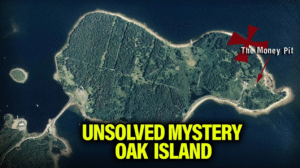
For Rick Lagina, the implications are profound. “I’ve always believed what happened here happened long ago,” he said. “This adds more fuel to that belief.”
Campbell agrees that the mystery is only deepening. “It’s puzzling,” he admitted. “But each new find strengthens the case that someone, somewhere, brought these coins across an ocean. The real question is: who?”
As the team prepares to intensify their search on Lot 5 and surrounding areas, Oak Island’s most ancient clue yet suggests that its secrets stretch far earlier—and far wider—than anyone once imagined.