Oak Island Season 13 : Why Did the People of Oak Island Leave Almost Nothing Behind? The Imitation Jewel That Raises a Dangerous Question
Oak Island Season 13 : Why Did the People of Oak Island Leave Almost Nothing Behind? The Imitation Jewel That Raises a Dangerous Question

For more than two centuries, Oak Island has been defined not only by what has been found, but by what is missing. One of the most unsettling questions surrounding the island has resurfaced in Season 13, Episode 8, “Into the Fold”: why did the people who worked here leave almost nothing behind?
Historical context suggests this absence is deeply unusual. At the time many of Oak Island’s underground features are believed to have been constructed, large-scale operations required manpower, tools, food, shelter, and waste. Hundreds of people may have lived and worked on the island for extended periods. Yet compared to other historical sites of similar scale, Oak Island remains eerily clean.
That contradiction has now become impossible to ignore.
A Workforce That Vanished Without a Trace
Most historical work sites tell stories through debris—broken tools, discarded objects, personal items lost or abandoned. Oak Island does not. Instead, the island offers carefully placed structures, disturbed earth, and engineered features, but almost no everyday artifacts.

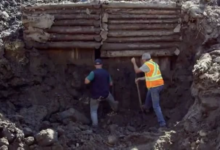


This has led the team to consider a troubling possibility: the people of Oak Island did not simply leave—they cleaned up.
Such an effort would require planning, coordination, and intent. Removing tools, personal belongings, and evidence of habitation is not something done casually. It suggests that whoever worked on Oak Island wanted their presence forgotten, their purpose obscured, and their story erased.
But why?
The Stone Structure and the Jewel That Doesn’t Belong
Episode 8 introduces a discovery that adds new fuel to this mystery. While excavating a strange stone structure, the team uncovers an imitation jewel—an object that immediately raises eyebrows. It is not a valuable gemstone, nor does it appear to be accidental debris. Its presence feels intentional.
An imitation jewel is, by nature, symbolic. It suggests representation rather than wealth. This has led to speculation that the object may have served as a marker, identifier, or signal rather than a treasure. Some theories suggest it could have been used to indicate rank, role, or access within a larger operation. Others wonder if it functioned as a decoy—something meant to mislead or distract from a greater truth.
What makes the discovery so compelling is its placement. Found within a stone structure tied to deliberate construction, the jewel feels connected to the broader system beneath Oak Island rather than to random loss.
Cleaning Up After History
If the imitation jewel is a clue, it supports a growing theory that Oak Island was not simply abandoned—it was closed. The people who worked there may have intentionally removed evidence of daily life while leaving behind only what could not be easily erased: stone, tunnels, and engineered features buried deep underground.

This raises uncomfortable questions. Was Oak Island a temporary operation with a clear end goal? Was secrecy essential to its success? And most importantly, what was important enough to justify such extreme measures?
Episode 8 does not answer these questions, but it reframes them. The mystery is no longer just about treasure. It is about intentional absence.
A Bigger Secret Still Hidden?
The imitation jewel may not be valuable in itself, but its significance could be enormous. It hints at symbolism, organization, and purpose—elements that suggest Oak Island was once part of something far more structured than previously believed.

If hundreds of people truly worked here and then vanished without leaving a trace, Oak Island may represent one of history’s most carefully concealed operations. Not a failure. Not a legend gone wrong. But a project completed exactly as intended.
And that possibility may be more unsettling than any hidden treasure.
As Season 13 continues, Episode 8 stands out as a turning point—not because it reveals answers, but because it forces the hardest question yet: what kind of operation leaves almost nothing behind—and why was it so important that history forget it ever existed?