Oak Island Just Had One of Its Biggest Years — Here Are the Discoveries You Missed
Oak Island 2023: Ten Discoveries That Have Redefined the Island’s Most Enduring Mystery
Oak Island’s 2023 season delivered one of the most diverse ranges of discoveries in recent years—spanning relics, engineered structures, geological anomalies, and artifacts that stretch from the 15th century to the early 1900s. While none of these finds offer a final answer to the mystery, each one adds a new layer to the historical and archaeological landscape of the island.
Below is a detailed look at the Top 10 most compelling discoveries of 2023 and what they could mean for the centuries-old enigma.

1. The D2 Borehole Boulder and 80-Foot Relic Layer
The year’s first major breakthrough came from the D2 borehole, where the team struck a massive boulder at 80 feet—precisely where earlier boreholes had encountered unusual resistance. Alongside the boulder were fragments of softwood and a piece of ancient-looking Macintosh fabric, fueling theories that the structure may be connected to early treasure-hunting attempts or even pre-1800 activity.
2. A Kaufman Rubber Boot Linked to the 1909 Roosevelt Expedition
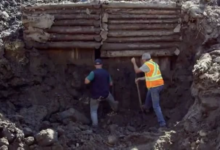
A deteriorated rubber boot bearing the Kaufman brand—popular in the early 1900s—was discovered supported by wooden structure remains. The artifact may be linked to the 1909 excavation overseen by Franklin Delano Roosevelt during his involvement with the Old Gold Salvage and Wrecking Company. If verified, this could offer rare physical evidence of Roosevelt’s work at the original Money Pit.


3. Possible Fragment of Roosevelt’s Boot and an Offset Tunnel Connection
Further excavation revealed another footwear fragment believed to match the Roosevelt-era boot. Dr. Croll proposed that the find might link to a nearby tunnel potentially leading to an offset treasure chamber. Bedrock was later reached at roughly 130 feet—consistent with historical accounts that treasure deposits may lie just below this depth.
4. A 15th-Century Rock Drill
Blacksmithing expert Carmen Leg examined a rock drill retrieved from the B4C shaft at more than 100 feet deep. He dated it to the mid-1400s. Such a tool suggests organized subterranean work centuries before the Money Pit story began—possibly widening tunnels or cutting chambers for concealed storage.
The team also mapped metallic anomalies near Frog Island using a magnetometer survey, raising the possibility of a submerged vessel.
5. Shipwreck Indicators on Lot 8 and Frog Island
Ground-penetrating radar and marine magnetics revealed a large metallic anomaly between Oak Island and Frog Island. Dr. Spence suggested the outline resembled a shipwreck, and the team began early-spring dive planning.
Meanwhile, Lot 8 yielded debris consistent with ship components, strengthening the hypothesis that a vessel—or parts of one—may have been buried or dismantled in the area.
6. Human Bones and Medieval Burial Artifacts
One of the most talked-about episodes involved the reported discovery of bones and artifacts in an underground chamber. Ornate ceramics, ceremonial objects, and even sword fragments were identified alongside skeletal remains believed by some to bear characteristics of high-ranking medieval individuals.
Another find—the parchment fragment from TF1 spoils—contained iron-based ink striations, typical of European manuscripts dating back to early medieval periods.
7. Gold Fragments and Silver Concentrations
The core-drilling program continued to return persuasive indications of precious metals. Chemical assays identified gold fragments and significant silver concentrations at targeted depths.
Historical review revealed that dynamite blasts in 1909 could have scattered metal shards, but the concentration pattern suggests more than searcher contamination.
8. Portuguese Stone Shot and Knights of Christ Links
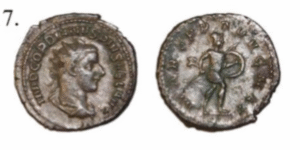
A 4-cm iron ball—matching Portuguese stone shot calibers from the 1400s—was extracted from deep Money Pit sediments. Crew members connected the find to the Knights of Christ, the rebranded successors of the Templar Order under King Denis of Portugal in 1317.
The island’s famous cross-shaped stone alignment is also speculated to resemble Treasury or Order of Christ symbols seen in Tomar, Portugal.
The team later uncovered wood fragments resembling ship planks and trapezoid cargo-boat pieces dating to around 1680.
9. Wooden Tunnels Possibly Dating to the Late 1400s
Evidence of wooden tunnels prompted the team to consider whether engineered shafts had existed long before the Money Pit’s 1795 discovery. A research trip to Portugal revealed structural similarities between the island and Templar-associated architecture in the Convent of Christ at Tomar, including the nine-level initiation well, which mirrors accounts of early vertical shafts.
A recurring symbol on the 90-Foot Stone also matched a mason’s mark found in Portuguese archives.
10. A 400-Year-Old Garnet Brooch
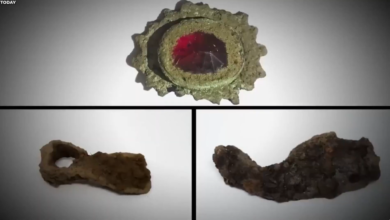
On Lot 8, Gary Drayton and Marty Lagina found a delicate garnet brooch estimated at over four centuries old. The craftsmanship suggests a European origin and hints at non-colonial presence on the island long before British settlement.
Large metallic anomalies and old equestrian equipment found nearby may indicate that a major structure—or a vessel fragment—remains buried beneath the soil.
A Year of Breakthroughs — But the Mystery Endures
From relics pulled from 80-foot depths to maritime anomalies and medieval-era tools, 2023 delivered one of the richest seasons of discovery on Oak Island. Yet the island remains as elusive as ever. Every artifact appears to answer one question while raising two more.
The search continues—and with each new season, Oak Island feels one step closer to revealing the truth hidden beneath its soil.