Clarkson says farmers can overcome ‘anti-farming’ Government
Clarkson says farmers can overcome ‘anti-farming’ Government
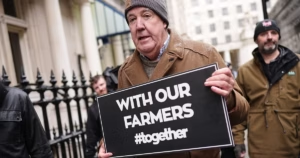
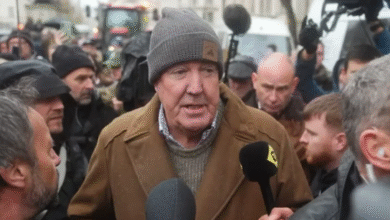
Jeremy Clarkson has said British farmers are resilient enough to survive what he describes as an increasingly “anti-farming” approach from the Government, warning that rural communities are being pushed to breaking point by policy decisions made far from the countryside.
The television presenter and farmer, best known for Clarkson’s Farm, made the comments while speaking at a farming event, where he criticised recent tax proposals, planning restrictions and environmental regulations that he believes place disproportionate pressure on small and medium-sized farms.
Mr Clarkson argued that, while farmers are accustomed to hardship, the cumulative effect of new rules is testing even the most experienced operators. “Farmers have always adapted,” he said. “They deal with weather, markets, machinery failures and labour shortages every year. What’s different now is that many feel policy is being written by people who have never set foot on a working farm.”
His remarks come amid widespread concern across the agricultural sector following proposed changes to inheritance tax reliefs and land-use policies, which many farmers fear could threaten the long-term viability of family-run holdings. Industry groups have warned that rising costs, combined with tighter margins and regulatory complexity, are forcing some farmers to consider selling land or scaling back production.
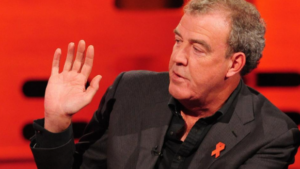
Despite his criticism, Mr Clarkson struck a defiant tone, insisting that farmers would ultimately find ways to endure. He pointed to diversification, direct-to-consumer sales and on-farm tourism as examples of how rural businesses are already reshaping themselves to survive. “Farmers are nothing if not inventive,” he said. “They will find solutions, because they always do.”
However, he added that resilience should not be mistaken for acceptance. According to Mr Clarkson, many farmers feel increasingly disconnected from policymakers in Westminster, arguing that consultation often feels superficial. “You can’t keep piling responsibility onto farmers while treating food production as an afterthought,” he said.
Government ministers have previously defended their approach, saying reforms are designed to balance food security with environmental protection and fiscal responsibility. A spokesperson for the Department for Environment, Food and Rural Affairs has said the Government remains committed to supporting farmers through grants, sustainable farming incentives and long-term productivity schemes.
Mr Clarkson’s comments echo sentiments expressed by farming unions, which have called for clearer communication and greater certainty. The National Farmers’ Union has repeatedly warned that confidence in the sector is being eroded, particularly among younger farmers unsure whether agriculture offers a stable future.
Since launching Clarkson’s Farm, Mr Clarkson has become an unlikely but prominent voice for rural Britain, using the programme to highlight the practical realities of farming life. While critics argue that his celebrity status simplifies complex issues, supporters say his platform has brought farming concerns to a wider audience that might otherwise overlook them.
As debates over food security, land use and taxation continue, Mr Clarkson maintains that the strength of British farming lies in its people rather than policy. “If history has shown us anything,” he said, “it’s that farmers will keep going. The question is whether those in power are willing to meet them halfway.”