Parker Schnabel Pushes Too Far — Overloaded Truck Explodes and Shuts Down Gold Rush Operation
Parker Schnabel battles mounting pressure as equipment failure compounds a difficult mining season
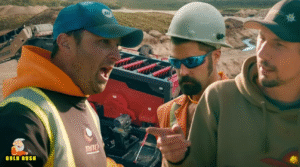
Parker Schnabel is facing one of the most demanding seasons of his mining career, with persistent operational problems steadily eroding his margin for recovery. The challenge has not been a lack of effort or determination, but a series of practical setbacks that have accumulated week after week, placing increasing strain on both people and machinery.
From the outset, this season promised ambition. Schnabel initially set his sights on producing 10,000 ounces of gold, a target that reflected confidence in his ground and equipment. As conditions worsened, that goal was revised down to 8,000 ounces. Even that reduced figure now appears increasingly difficult to achieve, with every lost hour and underperforming cleanup tightening the pressure.
The problems have been wide-ranging. Haul distances have stretched longer than planned, wash plant placement has been less efficient, and stockpiled pay dirt has run out sooner than expected. One wash plant at Sulphur Creek was forced offline entirely after exhausting its material, reducing the operation from three running plants to two. For a crew accustomed to high-volume production, the loss has been significant.




With fewer plants running, the entire operation has come to depend on a single long cut downstream, a section of ground that has been inconsistent throughout the season. While it occasionally produces respectable returns, most runs have delivered disappointing results. Despite this, Schnabel has been unwilling to divert resources elsewhere, leaving the team with no backup cuts, no spare stockpiles and no reserve equipment.
The burden of keeping production alive has fallen heavily on the haul operation. Mine boss Mitch Blaschke has relied almost entirely on two Volvo A60 rock trucks to keep material flowing to the remaining wash plants. Together, the trucks are capable of moving roughly 600 yards of dirt per hour, nearly double the capacity of other haulers on site. In a season marked by delays, they have been essential.
However, the pressure to maintain pace has come at a cost. With gold returns low and time slipping away, the trucks have frequently been loaded beyond their rated capacity. Schnabel is fully aware of the risks involved, but slowing down, in his view, would guarantee falling further behind.
That risk became reality when one of the A60s, operated by 22-year-old newcomer James Coots, suffered a major mechanical failure. While hauling a heavy load, Coots heard abnormal noises before warning alarms and error codes flooded the cab. Moments later, the truck was crippled.
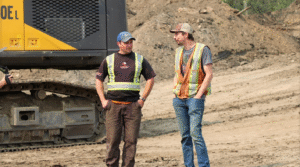
Inspection revealed that a companion flange connecting the drive shaft had snapped, likely weakened by an existing crack and pushed beyond its limit by the load. As the truck backed down a ramp, the broken shaft spun freely, tearing through brake lines, hydraulic hoses and electrical wiring. With no functioning hydraulics, the truck was left immobilised, still carrying around 60 tonnes of pay dirt.
Mechanic Taylor Matika led the recovery effort, explaining that driveline failures often cause widespread secondary damage. The immediate priority was to dump the load and move the truck back to the yard. That required replacing damaged hoses simply to restore enough hydraulic function to raise the box.
The crew worked under intense time pressure, replacing brake lines, wiring harnesses and finally the drive shaft itself. The installation required precise alignment and careful coordination, with the transmission left in neutral and the shaft guided into place inch by inch. Any sudden movement could have caused serious injury.
After hours of work, the repairs were completed and the truck was returned to service. Its absence, even for a short time, had already reduced production to a critical level. With both A60s running again, material once more flowed to the wash plant.
Yet the incident served as a clear warning. Pushing machinery beyond its limits can deliver short-term gains, but it also leaves little room for error. With no spare trucks available, another failure could halt production entirely.
Despite the repair, the broader challenges remain. Gold returns from the long cut continue to fluctuate, making planning difficult and undermining confidence. Cleanups have delivered steady but underwhelming results, falling short of the weekly pace Schnabel needs to recover lost ground.
Morale across the crew rises and falls with each cleanup. Long hours, mechanical stress and constant uncertainty have taken their toll. New operators are still gaining experience, adding another layer of risk in an already demanding environment.
Schnabel remains outwardly calm, focusing on problem-solving rather than frustration. He knows the season has become a test of endurance as much as production. Reducing the target once was painful; doing so again would feel like conceding defeat.
As trucks continue to haul and the wash plant runs day and night, the operation presses on in a fragile balance. The machines are holding together, the crew remains committed, and every ounce still matters. For Parker Schnabel, the fight to salvage the season continues, shaped by hard choices, heavy loads and the relentless passage of time.