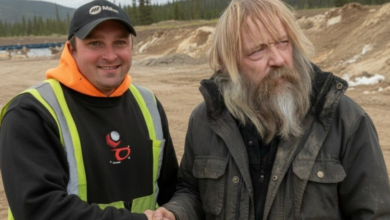
Parker Schnabel Risks It All And Pays $15 Million To Secure His Gold Mining Empire
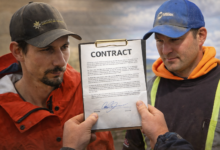
The Klondike goldfields of Canada’s Yukon Territory have long been defined by bold decisions and high financial risk. Few choices illustrate that reality more clearly this season than Parker Schnabel’s purchase of Dominion Creek — a deal worth nearly $15 million that could shape the future of his mining operation for years to come.
For Schnabel, one of the most prominent miners featured on Discovery Channel’s Gold Rush, the acquisition represents the largest financial commitment of his career. It is also a decision that places enormous pressure on the 30-year-old miner and his crew to deliver results before the short northern mining season comes to an end.
A Risk Measured in Millions
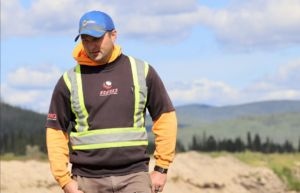
Dominion Creek is believed to contain a gold deposit potentially worth as much as $160 million. But in placer mining, the value of a claim means little until gold actually begins flowing through the wash plants.
Seven weeks into the season, Schnabel had yet to recover a single ounce from the new ground. Meanwhile, operating costs continued to mount.

Running a large-scale mining operation in the Yukon is expensive even during productive weeks. Excavators, bulldozers, haul trucks and wash plants require constant fuel and maintenance. Crews must work long hours in remote conditions where equipment failures can halt production for days.
Each breakdown comes with a price.
For Schnabel, the costs are particularly heavy this season because his crew is spread across three separate mining locations: Dominion Creek, El Dorado, and Australia Creek. Each site requires machinery, labour, and infrastructure to operate efficiently.
As the weeks passed without significant gold recovery, the financial pressure became increasingly visible.
A Season of Mechanical Challenges
The harsh terrain of the Yukon has presented repeated obstacles.
Spring temperatures have turned mining cuts into thick mud pits capable of trapping trucks and damaging heavy equipment. At one point, a loader slid off a road and became wedged against a tree, forcing the crew to halt other work while it was recovered.
Breakdowns have also been frequent. A major ripper cylinder snapped on a D11 bulldozer operating in the Dominion Creek “money pit,” temporarily stopping progress on stripping overburden.
To keep operations moving, mechanic Jordan Sans assembled an improvised solution that the crew jokingly referred to as a “Franken-dozer.” Using parts from multiple damaged machines, he rebuilt a functioning bulldozer that could continue pushing dirt.
The machine cost virtually nothing compared with the $2 million price tag of a new D11.
In a season defined by tight margins, such improvisation has become essential.
A Moment of Progress
Despite the setbacks, Schnabel’s operation finally began to see encouraging signs at the El Dorado cut.
Tyson Lee, one of the crew’s most experienced foremen, undertook the difficult task of moving the wash plant known as Slucifer to a new processing location. The 80-ton plant had to be dragged uphill on a steep incline using steel cables and an excavator — a maneuver requiring careful coordination.
Once installed, the plant began processing pay dirt for the first time in weeks.
The initial cleanup delivered 409 ounces of gold. While slightly below the team’s target, the result marked the first meaningful production of the season.
But the most significant breakthrough arrived soon after at Dominion Creek itself.
Dominion Creek Delivers
When Schnabel’s larger wash plant, Big Red, was finally brought online at Dominion Creek, the crew began processing material from drainage ditches surrounding the main cut.
This was not even the primary pay layer — merely peripheral ground that many miners might have ignored.
Yet after less than two days of operation, the cleanup revealed 118 ounces of gold.
At current market prices, that haul represents more than $230,000.
For Schnabel, the discovery carried deeper significance. If the peripheral ground was producing nearly three ounces of gold per hour, the untouched pay layer beneath could potentially contain far richer deposits.
The result offered the first indication that Dominion Creek might indeed justify its massive purchase price.
Production Begins to Climb
In the following week, Schnabel’s combined wash plants increased overall production significantly.
Gold from El Dorado, Dominion Creek, and additional recovery efforts pushed the weekly total to more than 360 ounces — nearly double earlier outputs.
While the operation still faces a long road ahead, the improved numbers have lifted morale among the crew.
Schnabel has estimated that he needs roughly 5,000 ounces of gold this season to make the Dominion Creek investment financially viable. With approximately 1,300 ounces now banked and multiple wash plants running, the target remains difficult but achievable.
A Season Still Uncertain
Elsewhere in the Klondike, other miners are facing their own challenges.
Tony Beets continues to juggle operations across Paradise Hill and Indian River, while Rick Ness is attempting a comeback season after a difficult period away from mining.
Each miner is confronting the same reality: success in the Yukon ultimately depends on what lies beneath the ground.
For Schnabel, Dominion Creek may hold the key to the future of his mining empire. The early signs are promising, but in the unforgiving environment of the far north, no result is guaranteed until the final cleanup.
The season is only beginning. Whether the $15 million gamble becomes a triumph or a costly lesson will depend on what the remaining months reveal beneath the gravel of Dominion Creek.