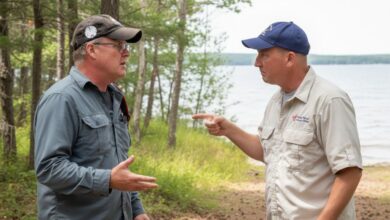
“A Viking Secret in Nova Scotia? New Clues Suggest They May Have Reached Oak Island Long Before Columbus”
A Mystery Older Than the Money Pit
For centuries, Oak Island has been synonymous with hidden gold, ancient traps, and an unsolved treasure legend. But a new theory is now stealing the spotlight from the Money Pit — one that points not to pirates or the Templars, but to a civilization famed for exploration: the Vikings.

Recent discoveries on nearby sites in Nova Scotia, combined with subtle clues emerging on The Curse of Oak Island, have revived a bold possibility: Norse explorers may have reached Oak Island — and left signs behind.
And if the evidence holds, it could change North American history as we know it.
The Viking Trail: From Greenland to Nova Scotia
It’s no secret that the Vikings crossed the Atlantic long before Columbus. Archaeologists have confirmed Norse presence in Newfoundland at L’Anse aux Meadows around 1000 AD.
But what has always been debated is how far south they traveled.
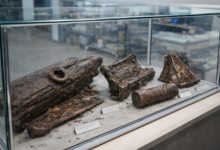
A growing group of researchers now believes the Vikings didn’t stop at Newfoundland — they may have continued into Nova Scotia, and possibly as far as Oak Island. The theory, once dismissed as fringe speculation, is gaining traction thanks to several intriguing discoveries.
Clue #1: Norse-Style Metalwork Fragments
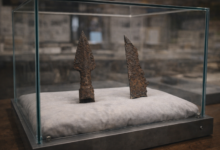
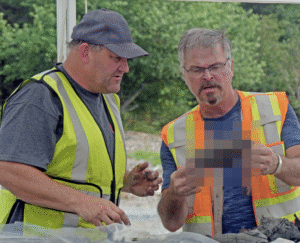
During recent seasons of The Curse of Oak Island, several iron fragments and artifacts surfaced that bear resemblance to Norse smelting techniques.
While none have been definitively proven Norse yet, metallurgical reports suggest:
-
unusual carbon signatures
-
forging temperatures consistent with early medieval ironwork
-
and shapes resembling rivet styles used on Viking boats
Though not conclusive, these findings have reignited interest in a Norse footprint on the island.
Clue #2: Carved Stones Resembling Norse Runes
Stone markings found on the island — including cross-like engravings and angular patterns — have drawn comparisons to runic inscriptions.
Some archaeologists say the patterns are coincidence.
Others argue they match the simplified carving style used by Vikings during short expeditions.
If authenticated, even a single runic stone could become one of North America’s most important archaeological discoveries.
Clue #3: A Possible “Landing Point” at Smith’s Cove
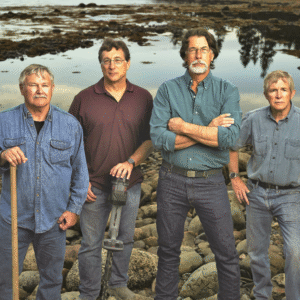
LIDAR scans and excavation work at Smith’s Cove have revealed stone alignments and wooden foundations unlike any known colonial structures.
Some experts propose these could be:
-
a makeshift Norse wharf
-
a temporary repair station
-
or even part of a small Viking camp
The idea may sound sensational — but Vikings were master seafarers, and establishing temporary coastline workstations was a common practice during their expeditions.
Clue #4: Trade Materials Not Native to the Area
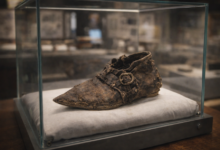
Fragments of European-style tools, ceramics, and iron slag have been found across Nova Scotia — some predating known French or English contact.
A minority of specialists believe these materials could belong to Norse trade networks that reached far beyond the modern archaeological record.
If proven, these artifacts would suggest that Viking influence in Atlantic Canada was broader than previously believed.
Why Vikings Would Visit Oak Island
Archaeologists have long theorized that the Norse explored Atlantic Canada for:
-
timber
-
iron ore
-
food supplies
-
and navigational studies
Given Oak Island’s natural strategic location, sheltered waters, and resource-rich environment, it would have made an ideal temporary outpost.
And some historians propose an even more daring idea:
that the Vikings may have mapped areas of Nova Scotia, leaving knowledge that future explorers — or secretive medieval groups — later inherited.
Could the Vikings Be Connected to the Oak Island “Treasure”?
While unlikely that the Vikings buried treasure in the modern sense, they might have:
-
stored tools or supplies
-
created early structures
-
or left behind artifacts that later settlers misunderstood as part of something larger
It’s possible that the Viking presence, misinterpreted over the centuries, contributed to the mythology that later surrounded Oak Island.
The Biggest Question: Proof or Coincidence?
For now, the Viking theory remains tantalizing but unconfirmed.
The Oak Island team continues to gather evidence, analyze artifacts, and explore the island’s deeper layers.
One thing is certain:
if even one artifact can be directly linked to Norse explorers, Oak Island may become the most significant Viking discovery in North America since L’Anse aux Meadows.
Until then, the mystery remains — but the trail has never felt warmer.