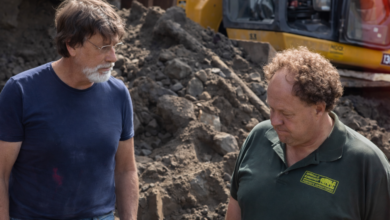
Oak Island Season 13: Breakthrough in the Money Pit Area Points to Possible Templar Vault
Oak Island Season 13: Breakthrough in the Money Pit Area Points to Possible Templar Vault
After 226 years of intrigue and countless expeditions, Oak Island may be on the verge of revealing another layer of its centuries-old mystery. In Season 13, Episode 19 of The Curse of Oak Island, the team’s drilling efforts in borehole DN 11.5 and the surrounding C1 cluster have uncovered compelling evidence that could point to a historically significant underground structure potentially containing treasure and artifacts.
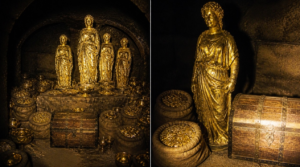
Drilling in DN 11.5, which reached depths between 80 and 120 feet, yielded the discovery of a void approximately 90 feet below the surface. The detection of trapped air and an open space roughly 1.5 feet across immediately alerted the team that they may have intercepted a previously unknown tunnel or chamber aligned with the Garden Shaft. Experts believe this alignment could indicate access to the core area often referred to as the “Treasure Zone,” a region associated with unusually high concentrations of gold and other metals.
Metal detection and core sample analysis have provided additional confirmation. X-ray fluorescence (XRF) scanning of wood recovered from the borehole detected trace amounts of gold embedded within the timber itself. Concentrations reached levels far above the natural background, suggesting intentional placement or historical contact with precious metals. Iron, manganese, titanium, and other elements were also identified, consistent with the geological and man-made context of Oak Island’s known subterranean features.

The excavation team, including Rick and Marty Lagina, Craig Tester, and archaeometallurgist Emma Culligan, coordinated the XRF analysis to validate these findings. The results indicated gold at approximately 700 parts per million—a remarkable outlier for materials from the site. Such results, coupled with the alignment of DN 11.5 with boreholes DN 12.5 and DN 13.5, suggest a structured underground system that may have been deliberately engineered to conceal valuable materials.
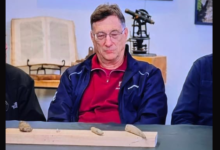
Exploration of the nearby Dunfield spoils—earth displaced during Robert Dunfield’s 1965 excavation—revealed additional artifacts, including hand-hewn wooden beams and tools such as chisels and Caribbean spikes. These items exhibit craftsmanship consistent with historical construction techniques, providing clues about the original builders and their methods. Analysts note that the Caribbean spikes, used to fasten timber, may correspond to construction elements found at significant depths, indicating the chamber and surrounding structures were purposefully reinforced.
Historical context adds to the intrigue. The C1 cluster, which includes borehole B4 located just 14 feet from D2, has previously revealed high levels of silver and gold in water samples. The latest drilling and XRF results indicate that metal concentrations are not only elevated but also concentrated in a defined area. Density mapping and imaging reveal a structured underground cavity roughly 20 by 30 feet, with boundaries and internal readings suggesting a man-made chamber rather than a natural void.
The combination of hand-hewn timber, gold-enriched samples, and organized underground space has rekindled speculation about connections to the Knights Templar. Legends surrounding Oak Island have long posited that medieval orders or explorers may have constructed subterranean vaults to protect valuable artifacts, and the current findings provide the first substantial evidence supporting this theory.
While the precise contents of the chamber remain unknown, engineers and archaeologists agree that the discovery represents a significant convergence of multiple lines of evidence. Gold trace readings, structural anomalies, and the presence of historically manufactured materials suggest that the area is more than a random accumulation of metal or debris—it is a deliberately hidden system that may date back centuries.
The stakes are high. Oak Island’s complex flood tunnels, unstable ground, and historical collapses present ongoing risks to both the team and the site. Safety protocols, reinforced steel casings, and continuous monitoring are essential to ensure that the excavation can continue without catastrophic failures. Even minor errors could compromise both the operation and the integrity of the historical artifacts.
As the team continues to analyze samples, review density maps, and assess structural stability, anticipation builds. The possibility of uncovering treasure, historical artifacts, or evidence of a sophisticated medieval construction is tangible. The DN 11.5 findings, coupled with the C1 cluster results, suggest that Oak Island’s long-held secrets may finally be within reach, offering insights that go beyond monetary value to potentially reshape understanding of the island’s history and the engineering prowess of its original architects.
After more than two centuries of mystery, the combined efforts of drilling, analysis, and careful interpretation may have brought Rick and Marty closer than ever to the original Money Pit or a related hidden chamber, marking a turning point in the exploration of one of the world’s most enduring archaeological enigmas.