Oak Island Season 13 Ep 19: What They Discovered Under This Giant Boulder Changed Everything
After more than two centuries of intrigue, exploration, and mystery, Oak Island’s secrets may finally be within reach. In Season 13, Episode 19 of The Curse of Oak Island, a game-changing discovery has sent shockwaves through the treasure-hunting community. The unearthing of a massive 40,000-pound boulder has revealed something that could be the key to unlocking the island’s legendary treasure vault—an engineered structure that points to a much older, more intricate history beneath the surface. With new scientific evidence supporting these findings, this could be the breakthrough that answers questions about Oak Island’s long-standing enigma.
A Boulder that Changed Everything
The day started like any other excavation on Oak Island: drilling, digging, and hoping to uncover clues that would finally lead the team to the treasure hidden beneath the island for over two centuries. But when the team removed a boulder on Lot 8, weighing an astonishing 40,000 pounds, what they found beneath it was far more significant than anyone had expected.
Beneath the massive stone was a tightly packed layer of soil that had been carefully backfilled—a stark contrast to the loose, undisturbed ground around it. Archaeologist Fiona Steele, who was working the site, immediately recognized the formation was not natural. It was a human-made feature, deliberately constructed, with smaller stones arranged around a larger, asymmetrically placed boulder. This discovery led to the realization that this was not just another rock or natural geological feature—it was something intentionally placed with the kind of precision and purpose that raised serious questions about its origin.
The Unlikely Discovery of Silver and Lead Traces
The breakthrough came when Dr. Ian Spooner, a geoscientist, conducted tests on soil samples taken from beneath the boulder. Using an X-ray fluorescence (XRF) scanner, Spooner detected high concentrations of silver and lead—an unexpected and extraordinary find. What was particularly striking was the fact that these metals were found deep within a sealed structure, not just naturally occurring in the surrounding soil. This discovery was unlike any other on the island; Spooner had tested soil from various locations across Oak Island, but he had never encountered readings like these. The silver and lead traces suggested that the area had been deliberately concealed and protected for a very long time.

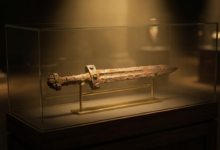
This was not just a random accumulation of metal particles; it was evidence of something intentionally hidden beneath layers of earth. But the significance didn’t stop there. The presence of lead also pointed to underground fires, a method used in medieval European mining practices to circulate air and allow workers to continue digging in deep shafts. The use of such techniques suggested that whoever buried something beneath Oak Island had knowledge of advanced mining practices—knowledge that wasn’t simply common at the time but carefully engineered to ensure secrecy and preservation.
Linking the Discovery to a Medieval European Connection
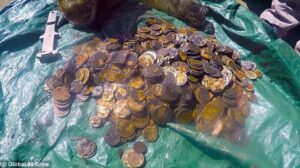
The idea that the structure beneath Lot 8 might be tied to ancient European mining methods raises the possibility that Oak Island’s treasure could be linked to a much older, more sophisticated operation. With evidence of silver, lead, and intentional construction, the discovery supports the theory that Oak Island was used by a group with the resources, skills, and intent to create a highly concealed vault. Could this be the work of the Knights Templar, who were rumored to have hidden treasure after their dissolution in the 14th century?
The use of megalithic construction methods—placing massive stones with careful precision—aligns with known Templar engineering techniques, as the Templars were reputed for their construction and engineering feats, particularly in the Holy Land and later in Europe. In fact, historical records suggest that the Templars used vaults and complex structures to safeguard their wealth and sacred relics, and it’s possible that Oak Island was one such hiding place.
Furthermore, the discovery of a Portuguese coin from the 1300s, found years earlier in the Money Pit, adds weight to the argument that Oak Island’s treasure is tied to a European origin. The Templars, associated with both wealth and mystery, may have used the island to store their treasure, hiding it from the authorities who sought to confiscate their assets after their persecution.
The Vault’s Potential Value and the Next Steps
As the team continues their excavation, they are faced with the most promising and dangerous phase of the investigation yet. The evidence suggests that beneath Lot 8 lies not just a treasure, but an ancient, highly engineered vault capable of holding significant wealth—perhaps as much as $150 million. With metal concentrations spiking at unprecedented levels and the discovery of a sealed shaft, the team is closing in on what could be one of the greatest archaeological finds of the century.
But the risks are high. Oak Island is notorious for its flood tunnels—underground channels that connect the Money Pit to the ocean. Any disturbance to the surrounding area could trigger a flood, destroying the site and halting the excavation. The team is proceeding with extreme caution, taking every necessary step to stabilize the area while continuing their work. Rick and Marty Lagina, driven by years of dedication to solving Oak Island’s mystery, are committed to following this path until they uncover the truth.
The Road Ahead: Uncovering Oak Island’s Secrets
For over 200 years, Oak Island’s treasure has captivated the imagination of treasure hunters, historians, and adventurers alike. The discovery beneath Lot 8 represents a dramatic shift in the search, one that suggests the island’s hidden vault may be closer than ever. As the team continues to dig, the mystery that has consumed generations of treasure hunters may soon come to an end. Will the treasure be revealed, or will Oak Island continue to guard its secrets? Only time will tell, but for now, the promise of discovery is stronger than ever.