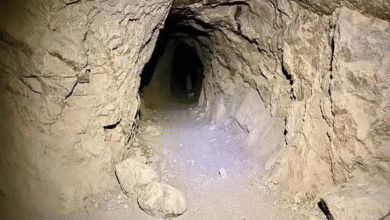
Oak Island Secrets: Samuel Ball’s 18th-Century Treasures Unearthed
Oak Island Mystery Deepens: Samuel Ball’s Legacy and 18th-Century Treasures Unearthed
Oak Island, Nova Scotia — In the latest discoveries on Oak Island, a series of remarkable finds linked to early 19th-century landowner Samuel Ball are shedding new light on his mysterious wealth and possible connection to the legendary Money Pit. Metal detection expert Gary Drayton, alongside Marty Lagina, has uncovered a range of artifacts — from a copper-handled pocket knife to a British Navy officer’s button — hinting at the hidden riches and influential connections of Samuel Ball.
On Lot 25, near the foundation of Ball’s former house, the team recovered a half-pocket knife with copper ends. “I’d say that’s a gentleman’s pocket knife,” Marty observed. Though incomplete, the blade remained, suggesting it may have belonged to a person of status. Experts believe it may point to Ball’s wealth — unusual for someone historically described as a simple farmer.
The exploration continued at Lot 26, where Gary Drayton and Michael John used a GPX 5000 with a large 32-inch coil to detect objects up to six or seven feet deep. The team suspects the area may have been the site of a temporary camp or industrial operation. “If this was a camp, we could be looking at evidence tied to stolen Spanish gold,” said Drayton, hinting at the tantalizing possibility that Oak Island’s fabled treasures could still lie buried nearby.



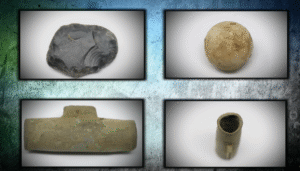
Meanwhile, Lot 24 yielded even more intriguing artifacts. Alex Lagina, along with archaeologists Laird Niven and Liz Michaels, discovered coins, buttons decorated with anchors, and firearm components, all dating back to Ball’s era. “This is a Royal Navy button, definitely from an officer. Its presence in Samuel Ball’s foundation is remarkable,” Marty noted, emphasizing the potential connection to high-ranking visitors and Ball’s wealth.
The evidence also aligns with Ball’s historical background: he served the British during the American Revolutionary War, gaining freedom and the opportunity to establish himself in Nova Scotia. The artifacts — dating from the early 1800s — support the idea that Ball’s possessions reflected both status and strategic connections. “We’re slowly piecing together the story of this very clever man,” Marty said.
One of the most remarkable finds was a cluster of six British copper coins from the reign of King George II, arranged in a small circle. “If these truly date back to George II, they predate even the Money Pit itself, which is incredibly exciting,” Drayton remarked. These coins, alongside buttons and firearm components, strengthen the theory that Ball may have been closely involved with Money Pit activities.
Additional finds include curved rivets, possibly from pistol ends, and small ox shoes. These artifacts suggest the presence of draft animals, hinting at heavy transport operations — potentially related to mining or treasure concealment. Archaeologists plan to have Carmen Legge examine these pieces to determine their origin and historical context.
These discoveries not only shed light on Samuel Ball’s enigmatic life but also fuel speculation about Oak Island’s hidden treasures. With evidence stretching back to the early 18th century, researchers hope that centuries-old secrets may still be waiting underground, undisturbed.
Alex Lagina reflected on the significance of these findings: “Every artifact — coins, buttons, the pocket knife — tells part of a bigger story. Ball was wealthy, knowledgeable, and likely aware of Oak Island’s mysteries. Each discovery strengthens that connection.”
As excavations continue, the public and researchers alike are closely following developments. Could Oak Island finally reveal more of its legendary hoard? The artifacts from Lots 24, 25, and 26 suggest that, at the very least, the story of Samuel Ball and his mysterious fortune is just beginning to unfold.