Oak Island Team Uncovers New Artifacts as Advanced Science Brings Treasure Hunt Closer to the Truth
Oak Island Team Uncovers New Artifacts as Advanced Science Brings Treasure Hunt Closer to the Truth
For more than two centuries, Oak Island in Nova Scotia has been associated with one of the world’s most enduring treasure legends. Now, after years of excavation and research, the team behind The Curse of Oak Island believes a series of remarkable discoveries — combined with modern scientific analysis — may finally be bringing them closer to understanding the island’s hidden past.
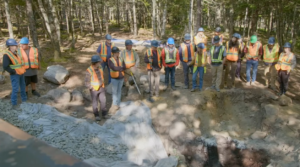
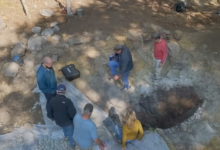
Recent investigations have focused heavily on the Garden Shaft near the historic Money Pit, a location long believed to be connected to the island’s mysterious underground structures. With the help of specialists from Dumas Contracting Ltd., the team launched a detailed probe-drilling operation designed to explore areas beyond the walls of the shaft.
Rick Lagina and his nephew Alex watched the work unfold from a nearby monitoring tent as drilling equipment was lowered into the narrow structure. Their goal was to test soil and water samples from depths exceeding 50 feet — an area where earlier operations had hinted at the presence of a void or chamber.
Those suspicions gained further momentum when laboratory analysis of wooden samples from the shaft’s lining revealed traces of gold. Metallurgist Emma Culligan, working at the Oak Island Interpretive Centre, conducted an X-ray fluorescence scan on the material and discovered measurable concentrations of the precious metal embedded within the wood.
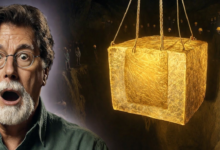
The finding supported Rick Lagina’s theory that water flowing through underground structures may carry microscopic particles of gold. Over time, the wood lining of the shaft could absorb those particles, effectively acting as a natural indicator of nearby mineral deposits.
Although the concentration detected was extremely small, Culligan explained that even trace readings were significant in geological terms. For the Oak Island team, the results provided scientific confirmation that precious metals exist somewhere within the underground network surrounding the Money Pit.
The discovery was greeted with enthusiasm among the researchers gathered at the site. Marty Lagina described the results as “fantastic,” noting that every new piece of data helps refine their understanding of what might lie beneath the island.
Beyond the Money Pit itself, investigations have also expanded across other areas of Oak Island — particularly Lot 5, a parcel of land purchased by the team in recent years that has already produced some of the most intriguing artifacts ever found on the island.
Metal-detection specialist Gary Drayton and researcher Jack Begley have been surveying the area extensively, marking promising signals before carefully excavating them. Among the objects recovered from Lot 5 are square nails dating back to the late eighteenth century and a mysterious lead token featuring a distinctive scalloped edge.
Initial scientific testing suggested the lead in the token may have originated from mineral sources associated with southern Europe, possibly linked to historical mining operations in the Mediterranean region. While the precise origin remains uncertain, the unusual composition raises questions about how such an object could have reached Oak Island centuries ago.
Other discoveries from nearby areas have included hand-forged spikes, ancient hooks possibly used in pulley systems, and fragments of ceramics dating back hundreds of years. Each artifact provides another clue in a complex puzzle that has intrigued historians and treasure hunters for generations.
Meanwhile, drilling operations at the Garden Shaft have reached depths of more than 90 feet. During the final stages of the season’s work, drill operators encountered what appeared to be wood buried deep beneath the surface — a possible indication of man-made structures such as tunnels or chambers.
Although the team was unable to fully explore the feature before the operation ended, the discovery has strengthened the belief that an extensive underground network may still exist below the Money Pit area.
In one of the most dramatic moments of the season, Gary Drayton lowered a metal detector into a water-filled cavity at the base of the shaft. The device quickly produced a strong signal indicating the presence of a non-ferrous metal object beneath the mud.
Such signals can represent materials like copper, silver or gold. However, without further excavation the team could not determine exactly what triggered the detection.
For now, strict excavation permits prevent the group from digging deeper into the shaft, forcing them to pause their investigation until future approvals can be secured.
Despite the frustration, Rick Lagina told his colleagues that every discovery — from ancient artifacts to microscopic traces of gold — is helping build a clearer picture of the island’s history.
As the team concluded its latest season of exploration, members gathered in the so-called “war room” to reflect on more than a decade of research. What began as a childhood fascination for the Lagina brothers has evolved into one of the most extensive archaeological investigations ever conducted on the island.
The mystery of Oak Island remains unsolved, but the growing collection of artifacts and scientific evidence suggests that significant activity took place there centuries before the modern search began.
Whether the island ultimately yields treasure or simply historical insight, the next phase of exploration will continue to combine technology, archaeology and determination in the ongoing effort to uncover the truth hidden beneath Oak Island’s soil.