Season 13 Twist: Could This Discovery Be the Key to Oak Island’s Treasure?
Season 13 of The Curse of Oak Island has been full of revelations, but episode 4, titled The Smoking Gun, may mark a pivotal moment in the series. For decades, Oak Island has intrigued treasure hunters and historians alike, but after years of drilling, research, and speculation, the show’s team appears closer than ever to uncovering not just potential treasure, but a coherent explanation of the island’s long-standing mysteries.
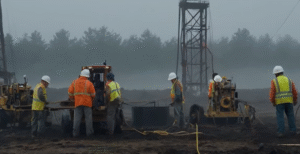
The episode opens with the team intensifying their drilling in the Money Pit, the island’s most infamous site. Core samples taken over 228 feet below the surface have revealed voids and spaces that defy natural explanations. According to historical and geological data, these zones should not exist, suggesting the possibility of human intervention. Each sample is examined meticulously, and the stakes are high: if treasure or evidence of historic activity was placed centuries ago, gravity would have caused it to settle near bedrock, where the team is now carefully probing.
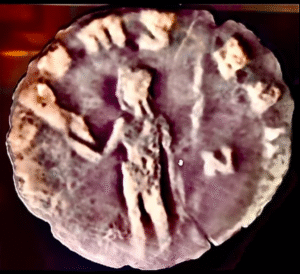
The turning point comes with the recovery of a tiny fragment from the core barrel. At first glance, it appears unremarkable, but under closer inspection, the team suspects it may be part of a coin. If confirmed to be silver, the fragment could provide critical evidence of deliberate activity in the Money Pit rather than mere geological coincidence. The fragment is sent for scientific testing, highlighting the series’ shift from traditional treasure hunting toward rigorous archaeological methodology.
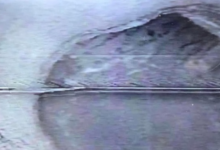
Meanwhile, the swamp, historically seen as a natural anomaly, emerges as a significant area in the investigation. As excavators probe the western edge, a previously unrecognized feature is uncovered. It appears abrupt, deliberate, and possibly engineered. Rick Lagina immediately halts operations to assess its significance. Speculation ranges from hidden pathways and staging areas to evidence of organized operations centuries earlier. The discovery underscores the idea that Oak Island may have been more than a hiding place; it may have been a pre-planned site for storage or ritual, selected for its geological properties.
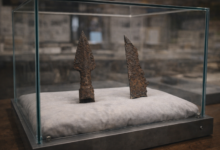
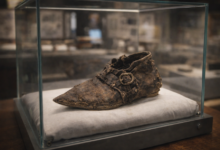
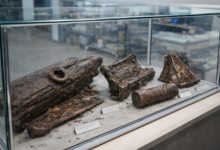
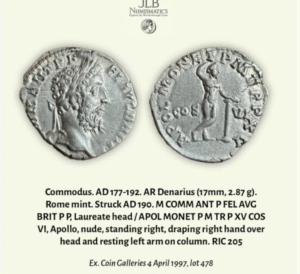
Throughout the episode, the team’s discoveries connect disparate pieces of evidence collected over past seasons. Roman coins from the 3rd century, a Portuguese crusado from the 14th century, Venetian seed beads, and medieval stake patterns now appear as potential chapters of a single narrative rather than isolated anomalies. Historian Doug Crowell and the team note that the artifacts’ depth, location, and context suggest intentional placement rather than chance accumulation.
Episode 4 emphasizes not just what has been found, but why Oak Island was chosen in the first place. The Money Pit, the swamp, and Lot 5—where numerous artifacts have surfaced—may represent coordinated sites within a larger operation. Rick Lagina reflects on the possibility that the island was engineered to conceal valuables, with geological features deliberately exploited to protect them. The focus is no longer simply on “what happened” but on “why it happened,” signaling a new phase in the investigation that considers purpose, design, and strategic planning.
The team’s energy throughout the episode is palpable. Each member approaches a different aspect of the island’s mystery: Marty focuses on data and core analysis, Gary on artifacts and metal detection, Doug on historical records, and Rick on overarching patterns. For the first time, all strands appear to converge, suggesting that Oak Island may have served as a controlled, centuries-long operation rather than a series of random or opportunistic burials.
Advanced imaging techniques further reinforce the episode’s significance. CT scans of the coin fragment reveal faint markings—possibly symbols or inscriptions—indicating deliberate craftsmanship. The evidence, if verified, could transform speculation into certainty and provide what the show’s team refers to as a “smoking gun” for Oak Island’s purpose.
While the episode ends without definitive answers, it sets the stage for a season that emphasizes science, methodical exploration, and cross-disciplinary analysis. The swamp, once dismissed as a mere bog, now emerges as a potential engineered landscape. The Money Pit continues to reveal structural anomalies, and Lot 5 may hold key insights into the island’s long history of activity.
Episode 4 of The Smoking Gun suggests that Oak Island is gradually revealing a coherent story hidden across centuries, blending archaeology, history, and forensic investigation. While viewers are left without resolution, the episode demonstrates that the island’s secrets may be closer to disclosure than ever before. For Rick Lagina and his team, every new find—no matter how small—contributes to a puzzle that, piece by piece, could finally illuminate the truth behind one of North America’s most enduring mysteries.