The Curse of Oak Island Season 13 Episode 19 700 Year Old Proof Found!
A recent development in the long-running search on Oak Island has reignited one of the most enduring theories surrounding the site: that it may hold evidence connected to the Knights Templar. While no confirmed treasure has been recovered, new analysis of a seemingly modest artefact is prompting fresh discussion among researchers, historians and viewers alike.

At the centre of the latest attention is a fragment of wool, recovered from deep within a waterlogged layer of the island. On its own, the object appears unremarkable. However, laboratory testing has suggested that the material dates back approximately 700 years, placing it within a narrow historical window spanning the late 13th to early 14th century . This period coincides with the final years of the Knights Templar, a medieval order whose sudden dissolution in 1307 has long been associated with missing assets and unresolved questions.
According to analysts cited in the findings, the textile’s structure, fibre composition and method of production are consistent with European manufacturing techniques linked to that era. More notably, the weave pattern has been compared to fabrics historically associated with organised institutional production, including those used by monastic or military groups. While such conclusions stop short of definitive attribution, they have nonetheless drawn attention due to their specificity.
The significance of the discovery lies not only in the age of the material but in its context. The wool was reportedly found within what researchers describe as an original construction layer—an area believed to be part of the earliest engineered features on the island. For those who support the theory of deliberate, large-scale construction, this detail is particularly important, as it suggests human activity at a time far earlier than many previously confirmed artefacts.
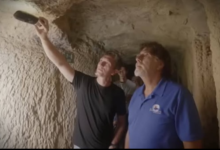
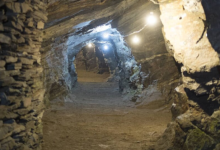

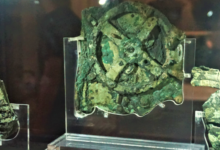
Oak Island, located off the coast of Nova Scotia, has been the focus of treasure hunting efforts since the late 18th century. The discovery of a mysterious depression, later known as the Money Pit, led to centuries of excavation attempts. Over time, accounts emerged describing wooden platforms, flood tunnels and other features that hinted at complex engineering. Despite extensive efforts, no definitive treasure has ever been recovered.
The introduction of modern technology has transformed the search in recent years. Techniques such as ground-penetrating radar, seismic imaging and chemical analysis have allowed researchers to explore areas previously beyond reach. These methods have produced a growing body of data, including evidence of underground anomalies and traces of metals in water samples, suggesting that further discoveries may still be possible.
Yet, as with many aspects of the Oak Island story, interpretation remains contested. While the wool fragment provides a tangible link to a specific historical period, experts caution against drawing firm conclusions about its origin or significance. Textile analysis can identify patterns and probable regions of manufacture, but it cannot definitively establish who brought the material to the island or why.

The connection to the Knights Templar, while compelling to some, remains a hypothesis rather than a confirmed fact. Historians note that although the order possessed the resources and maritime capability to undertake long-distance voyages, there is limited direct evidence placing them in North America during that period. The absence of written records or corroborating artefacts leaves room for multiple interpretations.
Nevertheless, the theory continues to attract attention, in part because it aligns with the scale and complexity of the engineering attributed to the Money Pit. Supporters argue that the sophisticated flood systems and structural design described in historical accounts would have required advanced knowledge and organisational capacity. Critics, however, suggest that such features may have been exaggerated over time or misinterpreted through successive excavations.
The broader significance of the wool discovery may lie less in confirming a single theory and more in expanding the historical narrative of Oak Island. Each artefact recovered adds to a growing archive of evidence that points to prolonged and possibly varied human activity on the site. Whether this activity was connected to a single coordinated effort or multiple unrelated events remains unclear.
For viewers of The Curse of Oak Island, the latest findings offer both intrigue and caution. The programme has built its appeal on the gradual accumulation of evidence, often emphasising the uncertainties inherent in the search. In contrast, external interpretations—particularly those circulating online—tend to present discoveries as definitive breakthroughs, sometimes without supporting evidence.
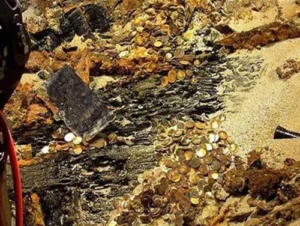
As excavation work continues, the focus remains on verifiable data and careful analysis. The wool fragment, while significant, represents one piece of a much larger puzzle. Its true importance will depend on whether future discoveries can provide the additional context needed to understand how it came to rest beneath the island’s surface.
For now, Oak Island remains what it has always been: a site of enduring mystery, where each new finding raises as many questions as it answers.