The Ship Beneath the Island — And the Evidence They Can No Longer Ignore
The Ship Beneath the Island — And the Evidence They Can No Longer Ignore
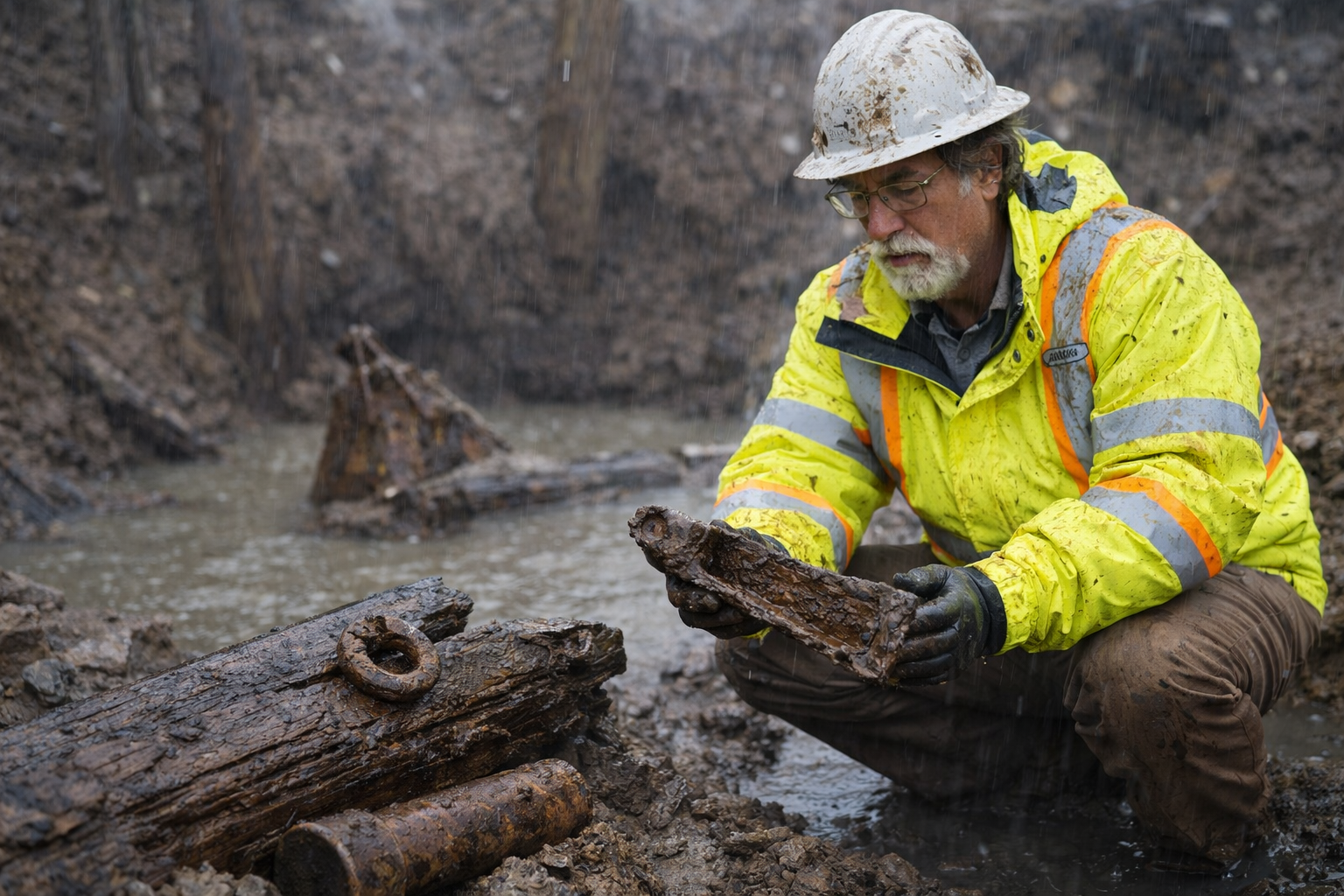
The idea of a ship buried beneath Oak Island once sounded like fantasy. A theory too big, too dramatic, too implausible even for a mystery as infamous as this one. But Season 13 has quietly done something dangerous — it has stacked evidence in a way that makes denial harder with every new discovery.
Not one artifact.
Not two.
But a growing collection of heavy iron objects that simply do not belong underground unless something massive brought them there.
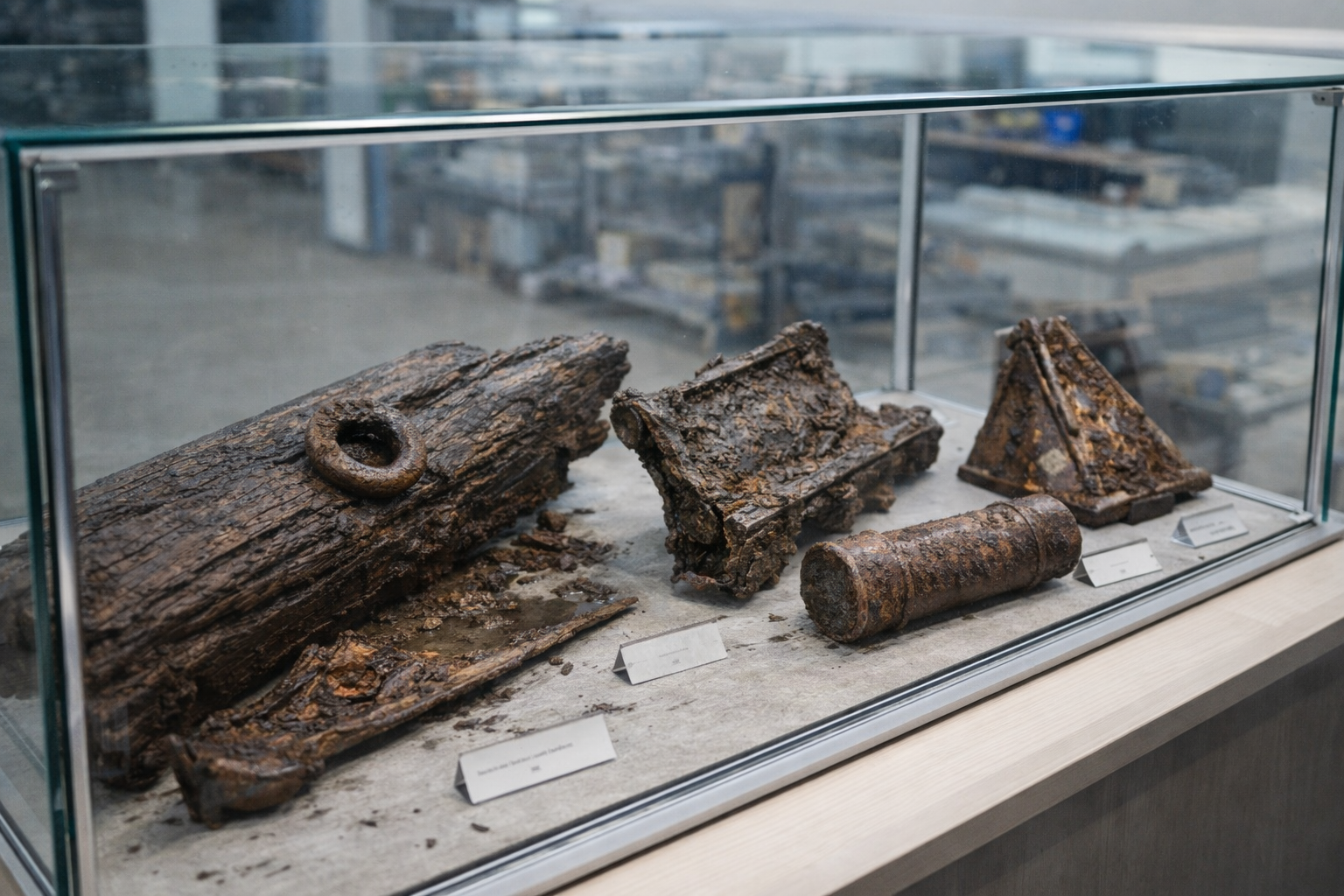
An iron ring bolt.
Burned iron fragments.
Large spikes.
Metal components consistent with ship fittings and railings.
Individually, each find could be brushed aside. Reused materials. Debris. Cargo. But together, they form a pattern — and patterns are where Oak Island truths begin to surface.


Ships do not fall apart neatly.
When a vessel is lost, dismantled, or deliberately destroyed, it leaves behind a specific signature. Heavy iron elements remain long after wood rots away. Fasteners. Structural reinforcements. Hardware designed to endure stress, weight, and motion. These are exactly the types of objects now emerging from Oak Island’s soil and surrounding waters.
And they are appearing in places where no ship should ever be.
Underwater findings around the island have added fuel to the fire. Iron objects embedded beneath layers of sediment. Burned metal consistent with intense heat — not natural corrosion. Spikes too large and too purpose-built to belong to anything other than a substantial maritime structure.
Burned iron is especially telling.
Fire aboard a vessel is not accidental. It suggests destruction, scuttling, or concealment. If a ship was deliberately destroyed to hide its contents, the metal would survive — warped, blackened, and heavy. Exactly what investigators are now pulling from Oak Island’s depths.
This is where the theory crosses a line.
Because if a ship was not merely wrecked, but intentionally hidden, then Oak Island was not just a destination. It was part of the plan.
The swamp, long suspected to be artificial, suddenly takes on new meaning. A ship buried beneath layers of engineered terrain would require more than secrecy — it would require protection. Water control. Misdirection. A system designed to keep curious hands busy while the real prize remained untouched.
A ship is not a small thing to hide.
It requires manpower. Engineering. Time. And above all, motive.
Why hide a ship beneath an island instead of salvaging it? Why dismantle it partially, burn sections, and bury the remains in a place designed to confuse future explorers?
The most unsettling answer is also the simplest: whatever the ship carried was more dangerous to reveal than to lose.
Season 13 has shifted Oak Island away from the idea of a single treasure vault and toward something far more complex. A ship could explain the scale of the operation, the volume of materials moved, and the repeated signs of organized labor across the island. It could also explain why no single dig has ever “hit the jackpot.”
Because the treasure was never meant to be uncovered by digging straight down.
It was meant to disappear.
Artifacts once thought random now begin to align. Iron rings that make no sense on land. Railing-like structures where no buildings existed. Spikes of a size and design suited for hull reinforcement, not colonial construction. Burned metal that hints at destruction rather than decay.
This is not the debris of settlers.
It is the remains of a vessel that should not be here.
If the ship theory is correct, then Oak Island is not just hiding treasure — it is hiding an event. A deliberate act of concealment carried out on a scale large enough to reshape the island itself. And that would mean the island’s defenses were not built to protect gold alone, but to protect a story that could not survive exposure.
Season 13 doesn’t declare the ship found. But it no longer treats the idea as impossible. The compilation of artifacts, underwater discoveries, and burned iron fragments has pushed the theory into dangerous territory — the kind where denial becomes harder than belief.
Because ships don’t leave clues like this by accident.
And if one truly lies beneath Oak Island, then the mystery was never about what was buried…
It was about what was sunk on purpose — and why no one was ever meant to recover it.